
Van Lang University Students of the Faculty of Creative Technology Develop Conservation Games With Prof. Donald Marinelli


Recently, Van Lang University students majoring in Film and Television Technology (specifically specialized in Game Technology Development) have undertaken multiple game projects and creative works as part of their coursework, focusing on the application of technology, design, and real-world user experience. These projects reflect how students approach such topics, develop ideas, and implement products following a practice-oriented learning model.
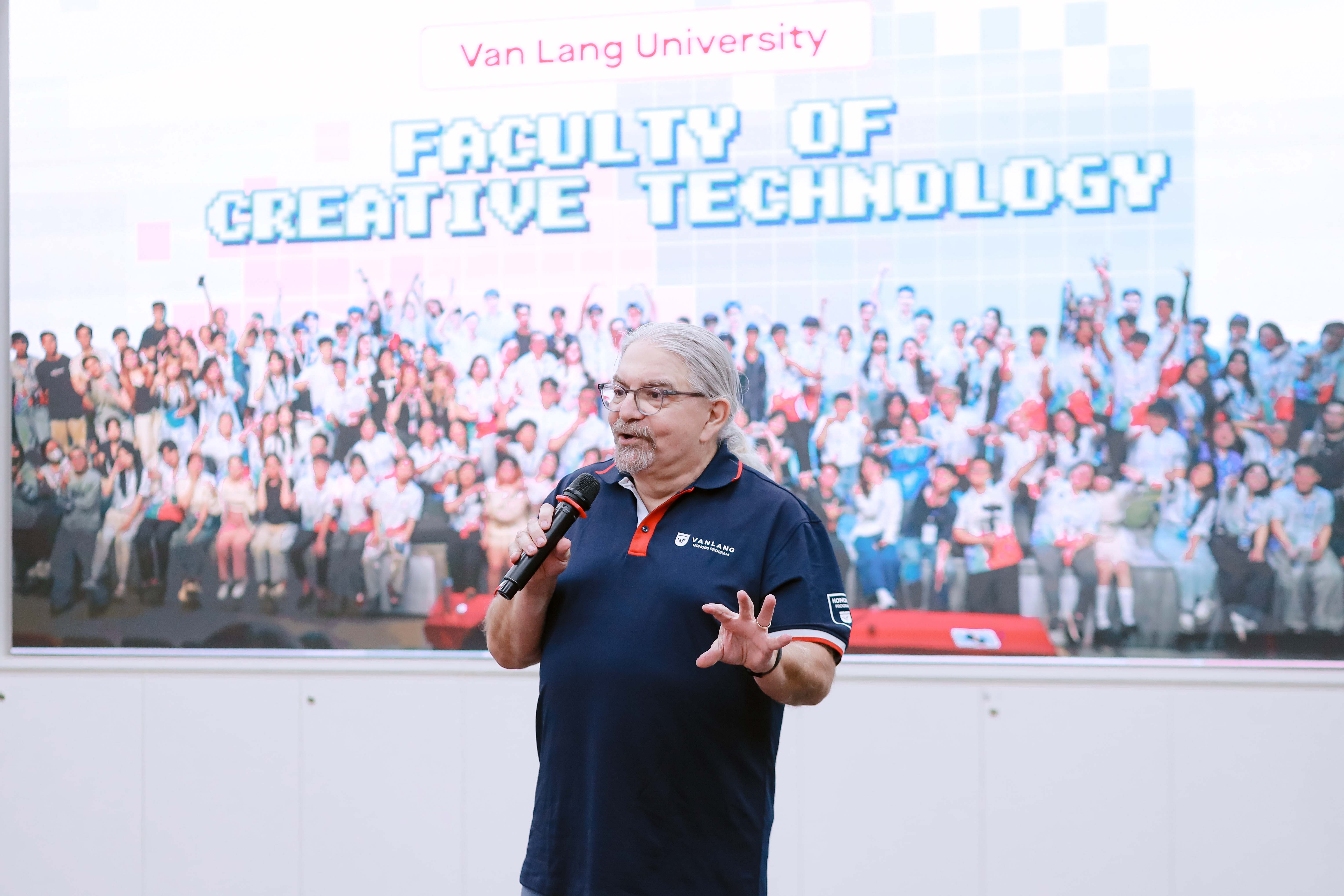
Prof. Donal Marinelli provided direction and guidance for the series of projects. The man himself is the Co-Founder of the Entertainment Technology Center (ETC) at Carnegie Mellon University and currently the Co-Director of the Experience Technology Institute (ETI) at Van Lang University. Aside from that, he serves as a professional advisor, sharing creative thinking and mentorship throughout the projects’ development.
Academic influence and mentorship from Prof. Donald Marinelli
Within the course framework, Prof. Marinelli helped shape the overall direction and proposed a common theme centered on twelve dogs, linked to animal conservation and the relationship between humans and ecosystem. Working from an open brief, Van Lang University students were encouraged to develop ideas independently, construct game worlds, design characters, and choose presentation formats suited to each team’s capabilities.

At the presentation stage, students in groups showcased their work to Prof. Donald via gameplay videos and introductory trailers. His professional feedback focuses on concept, player experience, visual storytelling, and the project’s potential for further development. This process gives students additional exposure to real-world approaches used in creative product development.
The projects that students have designed and released:
Within the course, a total of seven project teams produced work. Two titles, Zoophilist and Paws of Justice, entered development in January 2026 and are scheduled for release after the Lunar New Year. The remaining projects are currently at the concept, or prototype stage, demonstrating considerable potential for further refinement and expansion.
Zoophilist
Game genre: Simulation - Management - Rescue Adventure
Student team: Nguyen Hoang Ngoc Linh (Class 28), Hoan Diem Quynh (Class 28), Nguyen Ngoc Thuy Tien (Class 28), and Nguyen Minh Khoi (Class 28).
Zoophilist is a simulation game with management elements that places players in the role of a staff at an animal conservation center. Through rescue missions, animal care, and responses to environmental incidents, the game aims to raise awareness about animal protection, nature conservation, and human responsibility toward ecosystems.
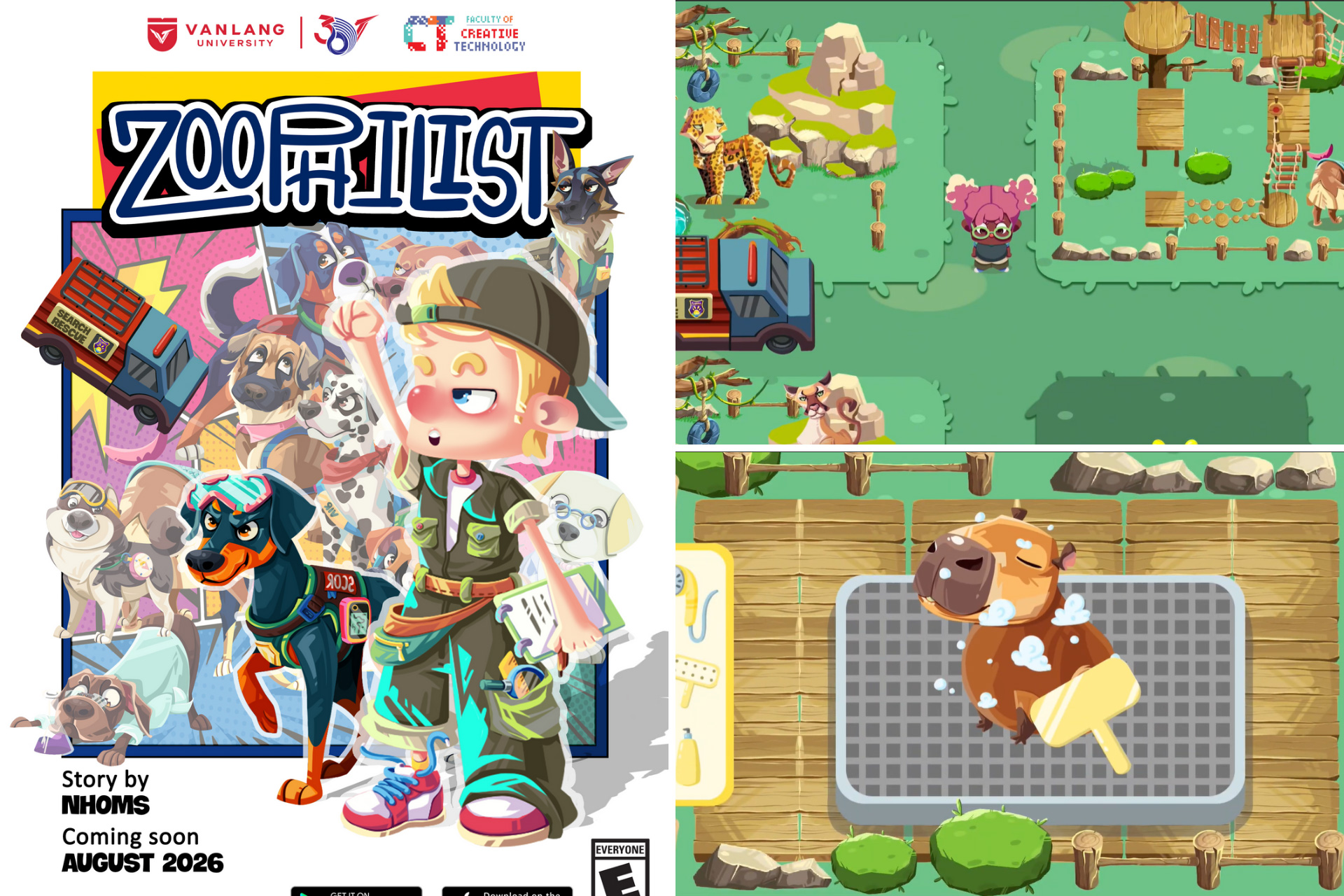
Inspired by real-world environmental challenges like natural disasters, pollution, and illegal poaching, Zoophilist recreates practical rescue missions. Players take part directly in rescue operations while managing and expanding the conservation center, broadening its reach and working with a wider range of species.The project emphasizes fostering care, attachment, and humane values through an educational, emotionally engaging gameplay experience.
Paws of Justice
Game genre: Action - Adventure
Student team: Dung Chi Thanh (Class 30), Nguyen Phuong Tram (Class 30), and Tran Le Mai Trang (Class 30).
Paws of Justice is an action-adventure game focusing on visual experience, character design, and atmospheric storytelling. Through its introductory trailer, this group demonstrates their ability to craft a fantasy world, personify animal characters, and convey the project’s overarching tone.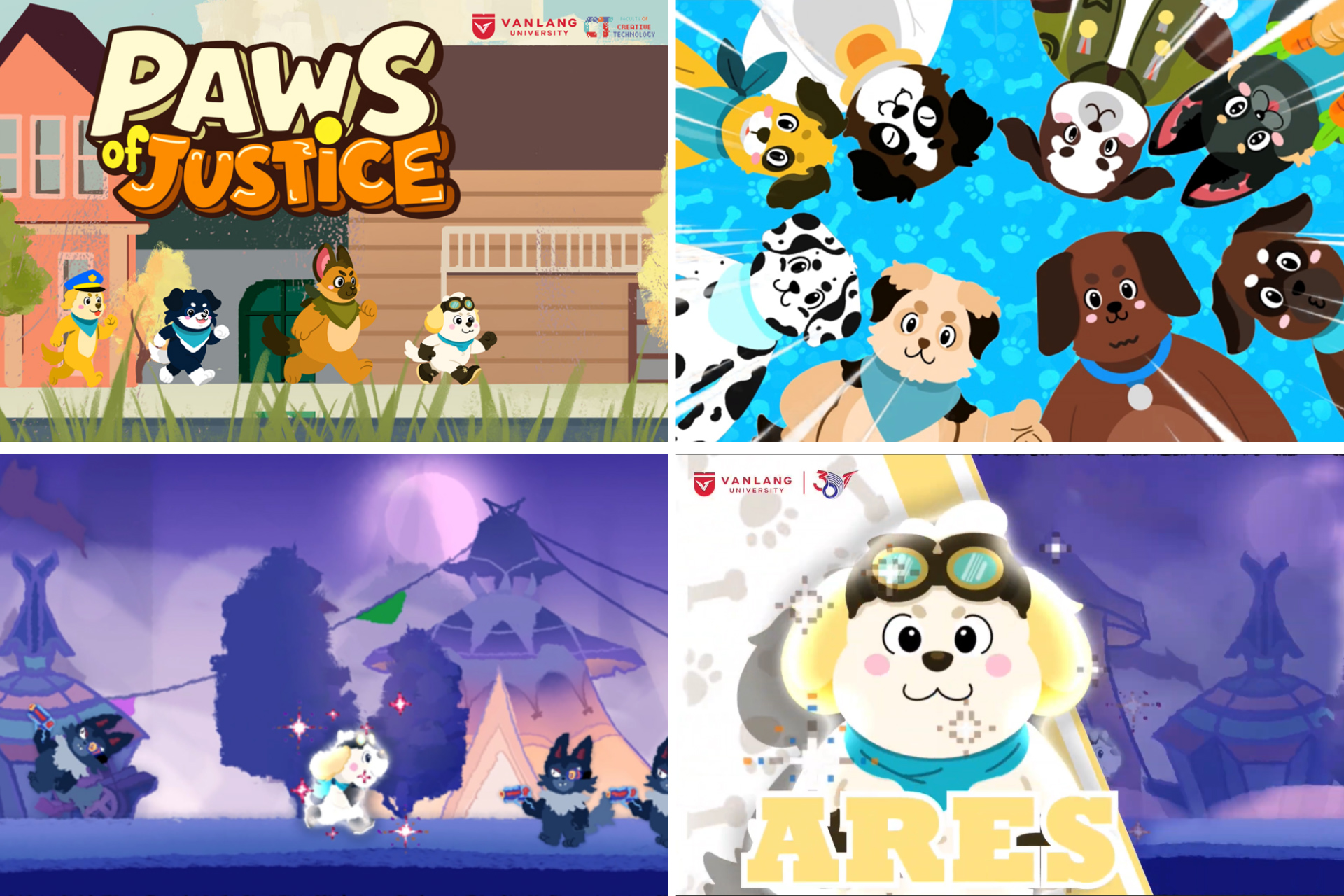
Exploring the themes of justice and courage, Paws of Justice is set in a world where animal characters take on the role of guardians of righteousness. The project blends action with emotional depth, highlighting integrity, responsibility, and the clash between good and evil through imagery, motion with a dramatic pace shown in the trailer.
Pawtopia
Game genre: Simulation - Puzzle - Collecting
Student team: Tran Khanh Linh (Class 28), Huynh Thi Lan Anh (Class 28), and Nguyen Ngoc Cuc Phuong (Class 29).
Pawtopia is a simulation game that one’s character plays as a rescuer and caregivers for animals. Through rescue missions, treatment, and interaction, the game also prioritizes raising awareness of animal protection and human responsibility in nurturing and caring for pets.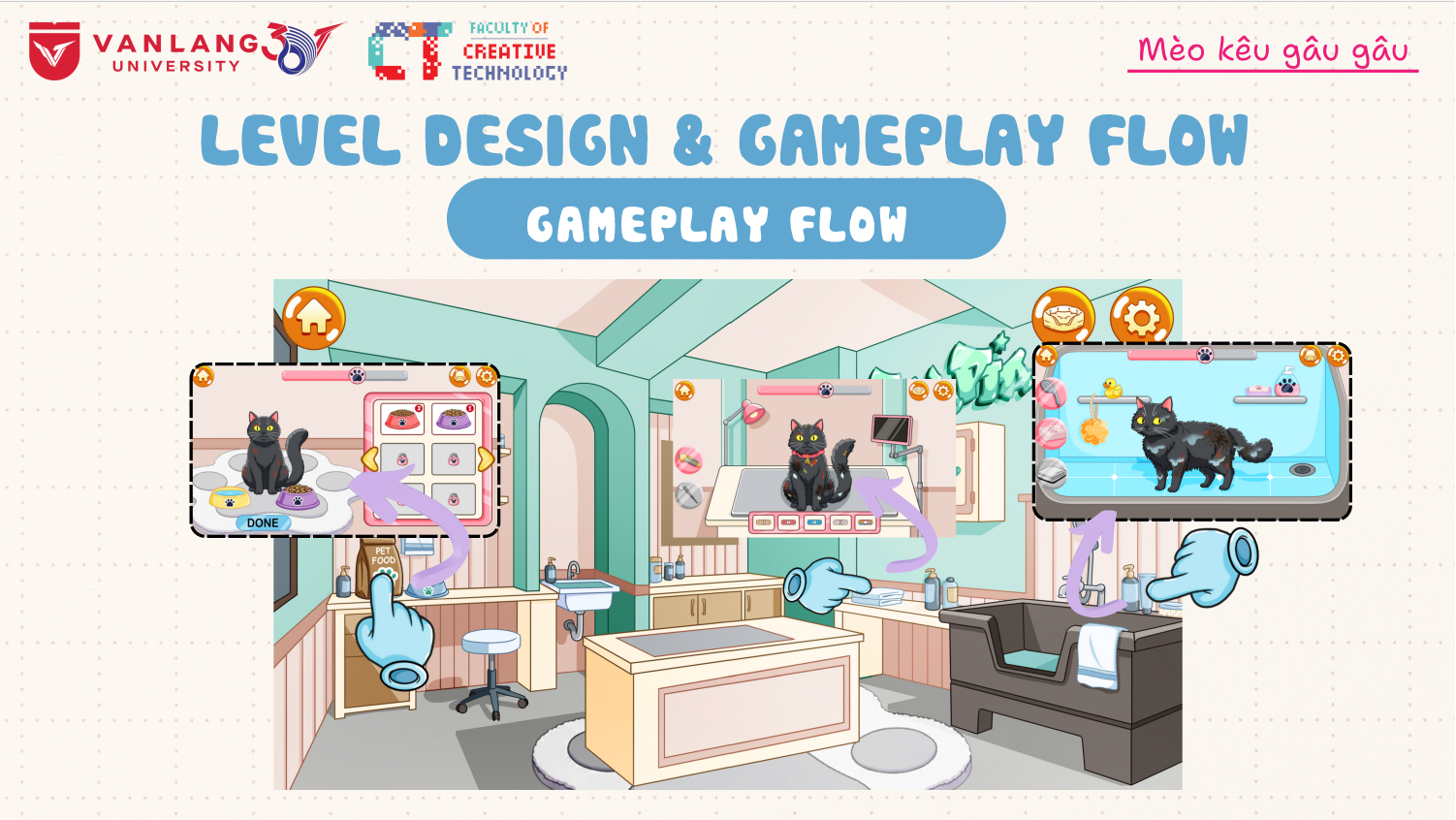
In Pawtopia, players act as volunteer rescuers working alongside veterinarians to save, diagnose, and care for pets in danger. The game combines life-simulation elements with puzzle mini-games and a collectible mechanic, emphasizing the bond between humans and animals.
Puppals
Game genre: Adventure - Side-scroller
Student team: Nguyen Ngoc Dang (Class 29) and Vo Trinh Xuan Pho (Class 30).
Puppals is a relaxed, mellow adventure game that brings players into everyday situations involving the support, protection, and care of animals. Looking through the gameplay experience, the project encourages attention to animal behavior and welfare, as well as timely, safe responses when interacting with animals.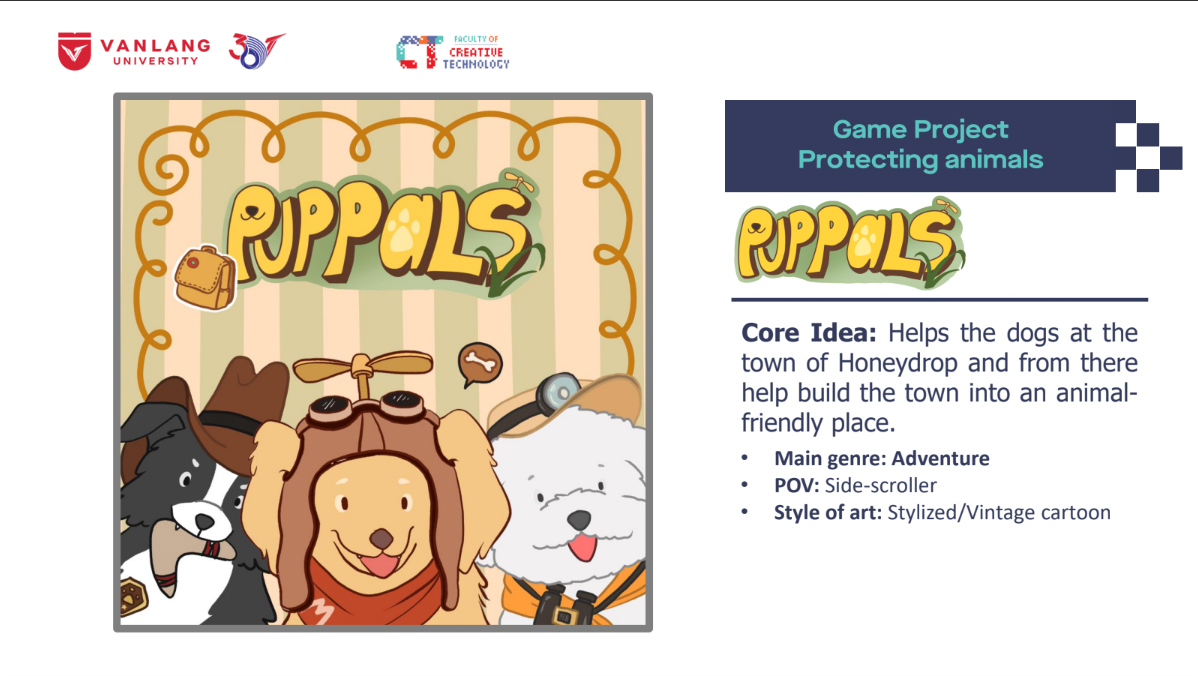
Set in the fictional town of Honeydrop, Puppals casts players as a local resident partnered with a companion dog with given tasks that involve helping, rescuing, and caring for dogs across the town and surrounding areas. Alongside completing tasks, players develop and upgrade the town, transforming it into a more animal-friendly community.
Lost Boy
Game genre: Puzzle - 2D Adventure
Student team: Tran Thuy Loan (Class 29) and Le Viet Minh Thu (Class 29).
Lost Boy is a puzzle-exploration game with a fairy-tale atmosphere focusing on gentle, accessible storytelling. The game invites players to roam its world, solve modest puzzles, and gradually experience the characters’ journey and emotions throughout the game.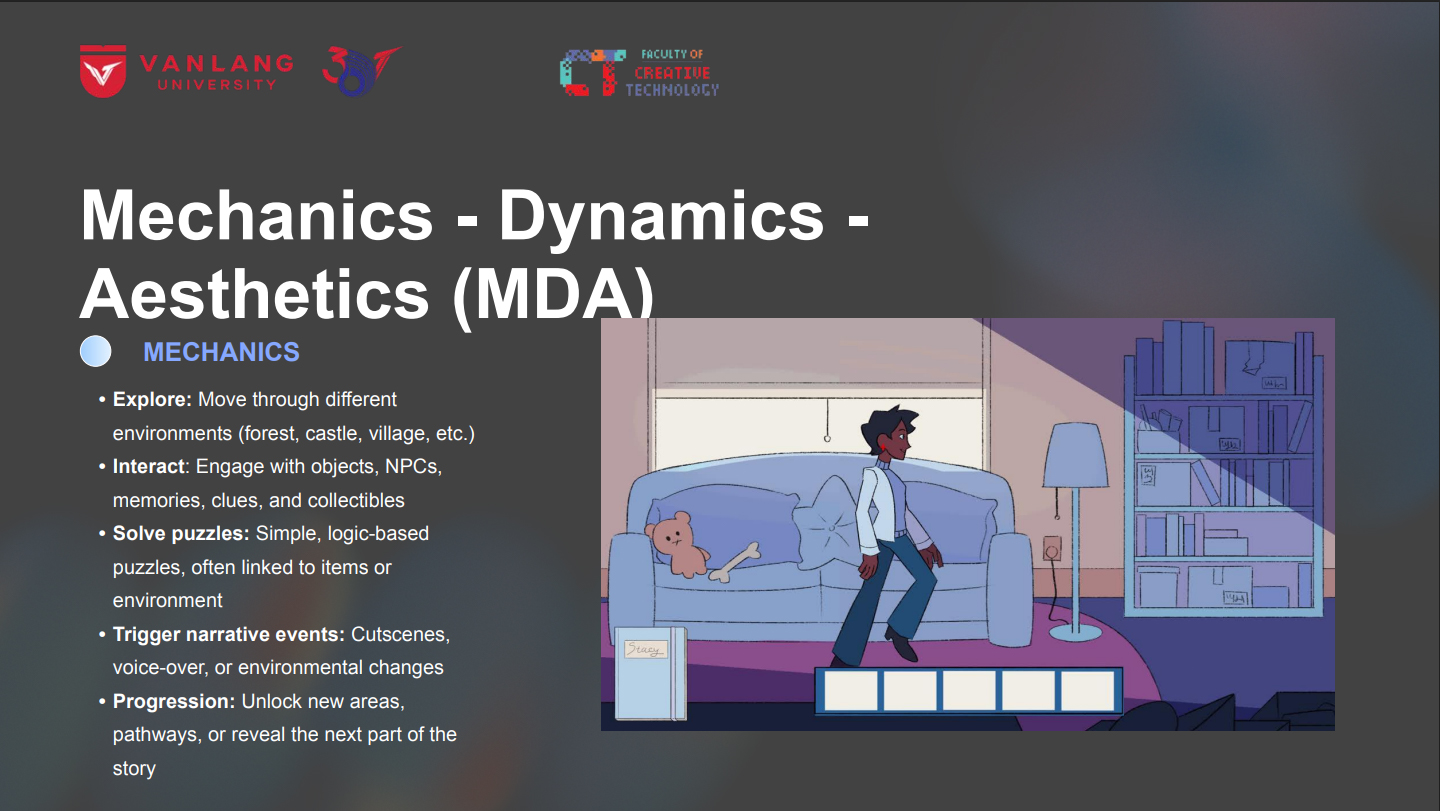
Drawing on familiar fairy tales, Lost Boy retells those narratives from a fresh perspective of using dogs and fragments of memory tied to them. Players assume the role of the protagonist searching for a lost dog, exploring varied locations around the town, collecting clues, solving puzzles, and uncovering intertwined short stories.
Let’s Go Frankie
Game genre: Action - Puzzle - Adventure
Student team: Do Duy Thai (Class 30), Nguyen Thi Anh Ly (Class 30), Lam Tam Nhu (Class 30), Pham Nhut Minh Kha (Class 31), Nguyen Huu Thang (Class 30), and Tran Nhu Huynh (Class 31).
Let’s Go Frankie is an action-puzzle game that blends entertainment with educational elements, requiring players to apply logical thinking and empathy to overcome challenges. The game highlights animal intelligence while conveying messages about trust and collaboration between humans and animals in the shared effort to protect ecosystems.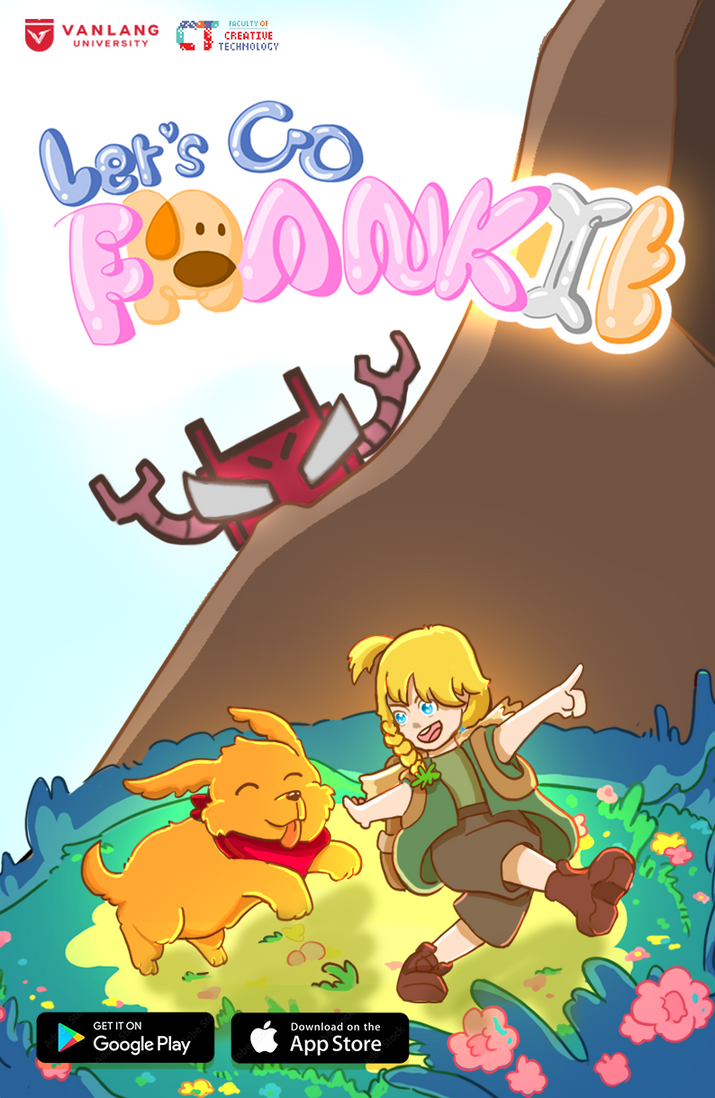
Set in a post-apocalyptic world where biodiversity is threatened by a domineering technological regime, Let’s Go Frankie casts players as Lucy and her companion dog Frankie as they traverse diverse zones. Players must solve logic puzzles under the pressure of pursuing robots to collect “Bio-Vials” that preserve life.
Obedient Dog
Game genre: Rhythm or music-themed / Trailer animation
Student team: Huynh Dang Hoang Vi (Class 30) and Dao Phan Tien Duc (Class 30).
Obedient Dog is a short trailer/animation project which focuses on character design, motion performance, and visual storytelling. Using a concise trailer format, the group aspires to convey the story’s mood and emotional core within a brief yet visually impactful runtime.
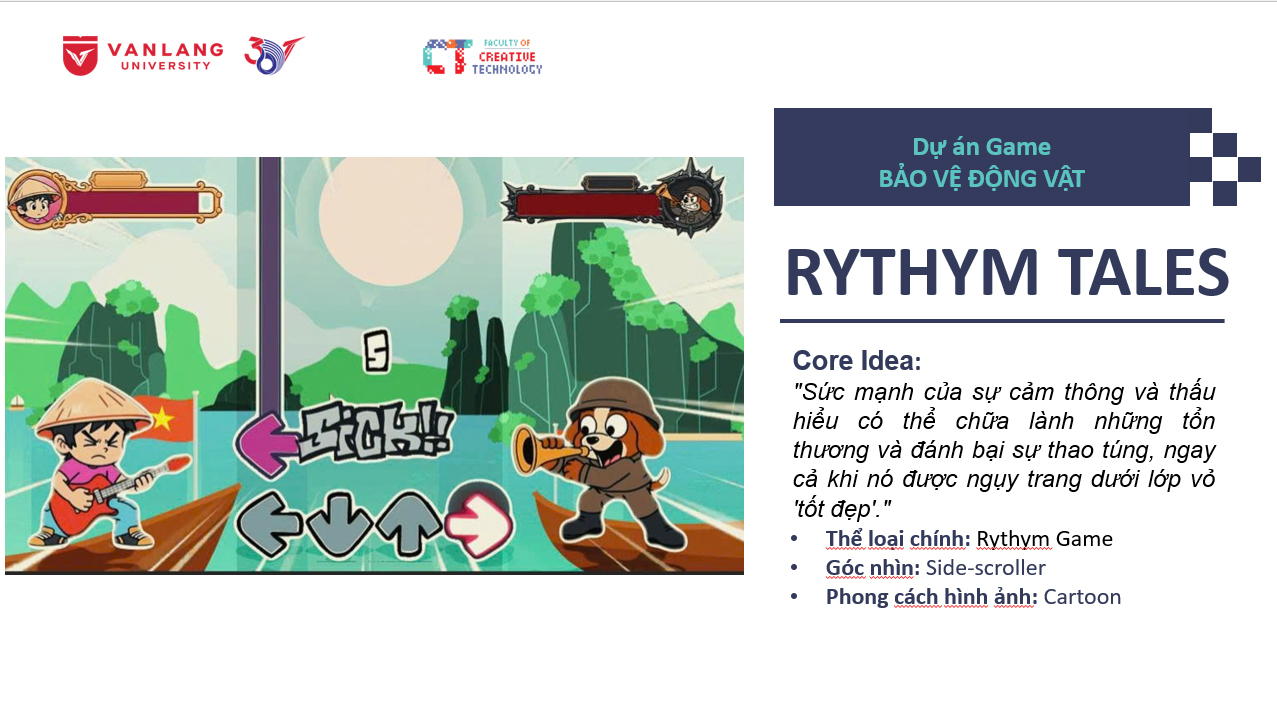
Drawing on the dog as a symbol of loyalty, attachment, and the bond between humans and pets, Obedient Dog relies on visual language, character movement, and editing rhythm to tell an emotionally resonant story. The project emphasizes the character’s inner life over dialogue, creating a strong visual and affective impression.
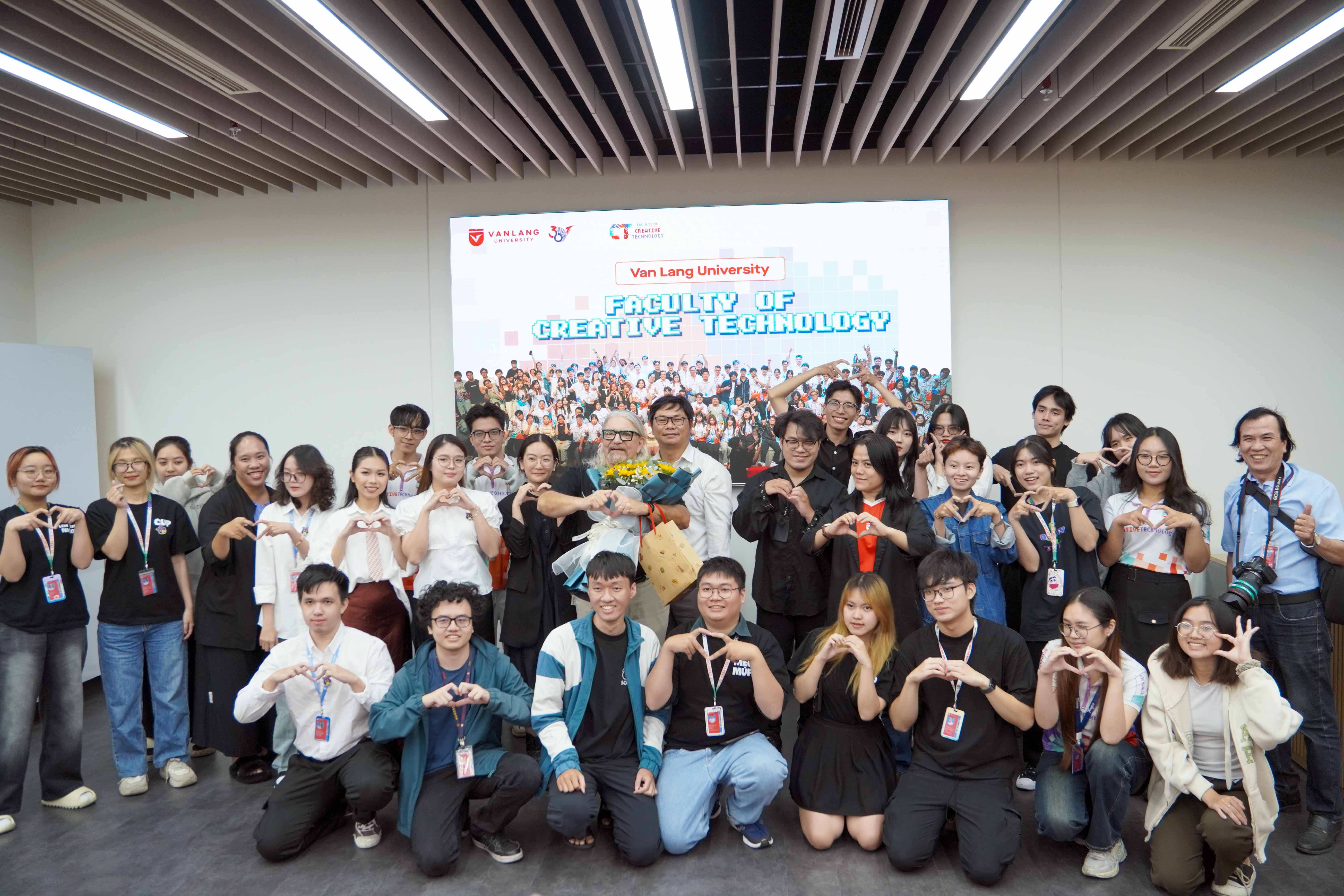
The series of student projects at Van Lang University, guided by Prof. Donald Marinelli, has enabled students to engage with the full development process for games and other creative products grounded in real-world experience. From initial concepts to finished works, students progressively honed their design thinking and implementation skills, building a foundation for entering the creative industries in the future.
Prof. Donald Marinelli: Van Lang University is a wellspring of knowledge.
News: Khanh Huyen
Photos: Faculty of Creative Technology
Tags