
Van Lang University discussed solutions to water pollution in industrial zones in a seminar


The solution of planting three types of native plants on wetlands to deal with water pollution is the research of Mr. Le Minh Truong (MSc.) - Faculty of Environment, Van Lang University, and the research team. This research was presented at the scientific seminar on "Water pollution in industrial zones and solutions," held on the afternoon of December 12th, May 2022.
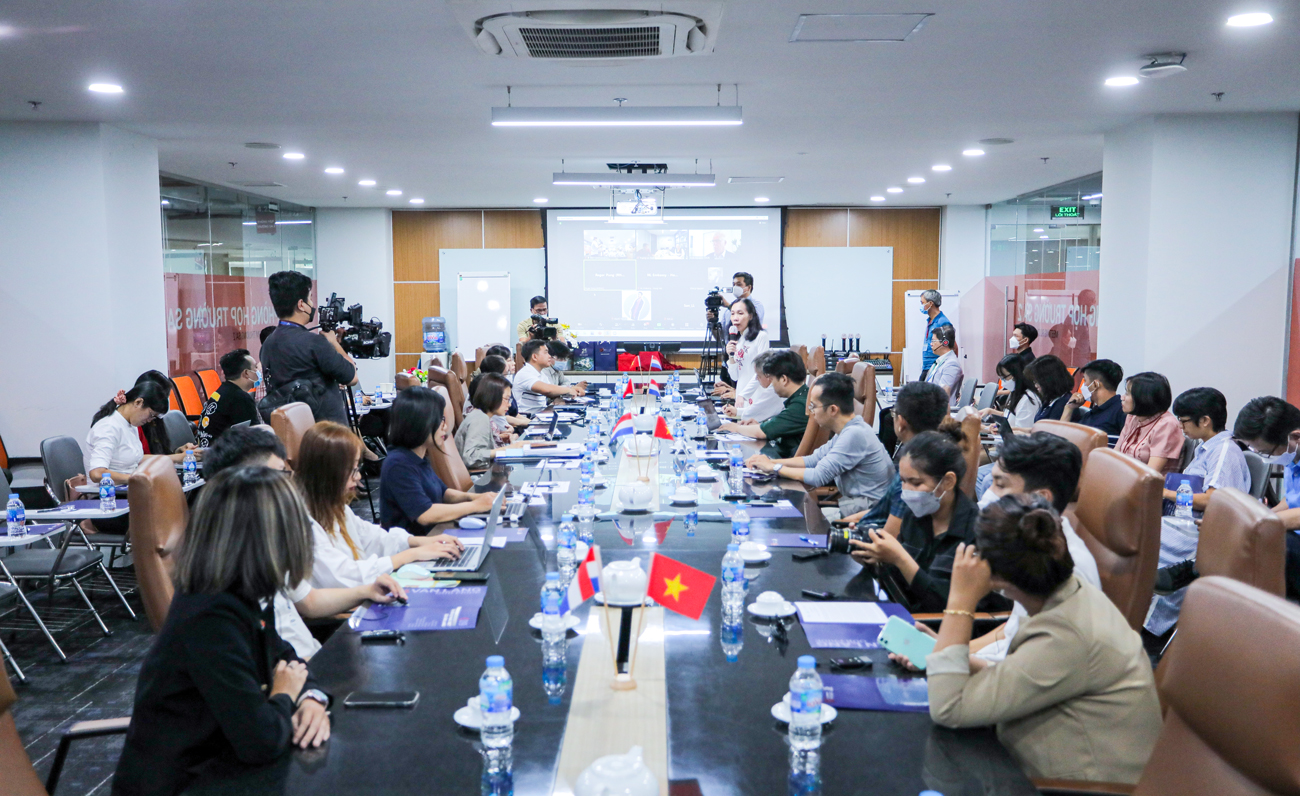
The seminar was organized online and offline by the Embassy of the Netherlands, the Consulate General of the Netherlands, and the RED Communication Research Institute in collaboration with Van Lang University on the afternoon of May 12th, 2022.
At the seminar, environmental experts discussed issues of reusing, recycling and diversifying water sources in the industry, thereby contributing to the protection of water sources and the development of amendments to the Law on Water Resources in the next two years of the Vietnamese Government.
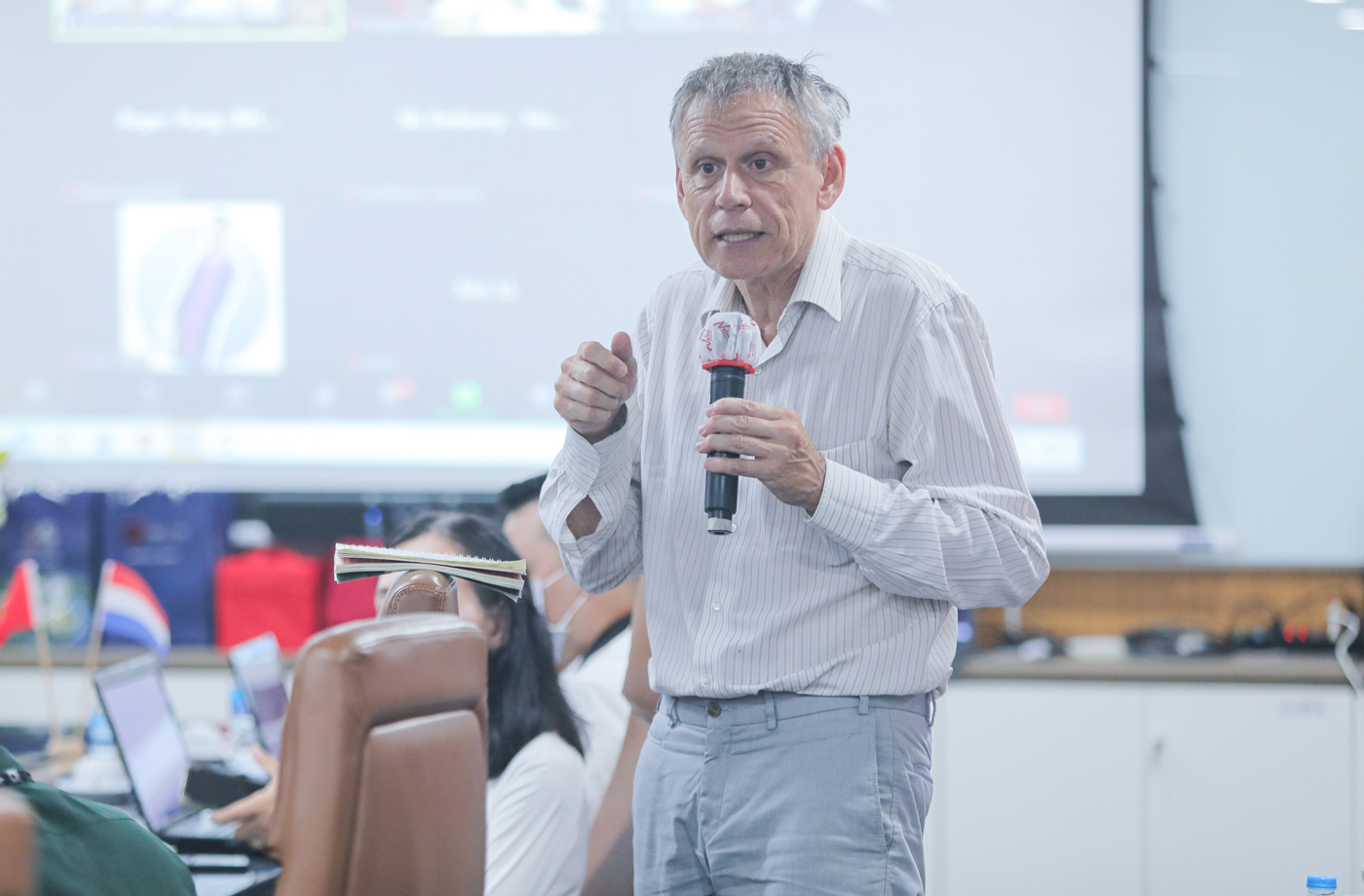
The content of the seminar was developed from the results of the reasearch project ENTIRE - ENabling susTainable Industrial development in Vietnamese delta's: REducing, Recycling and multi-sourcing industrial water (Sustainable industrial development in Vietnam's deltas: Reusing, recycling and diversifying industrial water sources), co-chaired by Wageningen University (Netherlands) and Van Lang University.
Mr. Le Minh Truong (MSc.) - Faculty of Environment, Van Lang University presented main findings from the ENTIRE project and proposed a process to reuse wastewater from using wetland and ion exchange technology to improve the quality of recycled water so that it can be used in industrial zones activities. The technology to treat and reuse wastewater aims to remove remaining pollutants including organic matter (expressed through COD index), nutrients (expressed through ammonia, nitrate and sulfate index), and some heavy metals.
In particular, the use of three types of native plants on wetland - Typha spp, Phragmites,Ccyperacea in order to reduce effectively COD (from 112 mg/L) respectively: Reed (<50 mg/L) > reed ( <70 mg/L) > tub (<80 mg/L). The top of these three types of plants can reduce ammonia from 0.6 to < 0.1 mg/L. Among them, Phragmites has the highest efficiency in nitrate treatment, reducing from 10 mg/L to < 1 mg/L. In particular, these water plants can survive at salinity levels of 250 mg/L and the research is continuing to evaluate the effects of salinity.
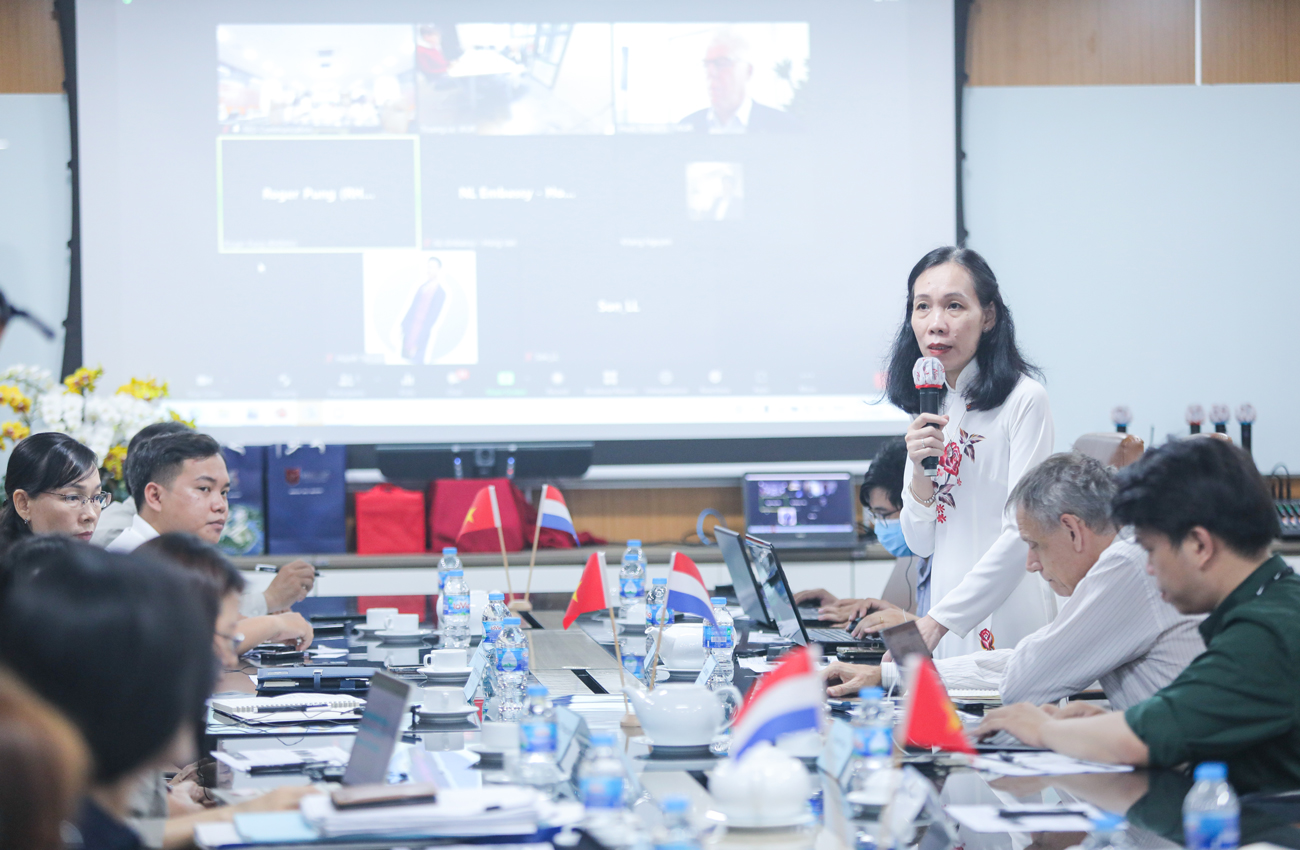
Experts also presented solutions to control water circulation aimining to become independent in using water in industrial zones. In particular, the representative of the research team, author Katarzyna Kujawa-Roeleveld shared the topic of sustainable industrial development in Vietnam's deltas through minimizing, circulating and diversifying water sources. The research team has cooperated with industrial parks such as Hiep Phuoc, Long Hau and Tan Thuan to develop, build the model, design and innovate the technology and institutional framework for water supply service so as to develop industrial development, and conservate the freshwater resources for urban activities and agricultural production…
In recent years, the problem of environmental pollution caused by human production and living activities has become an emerging issue which must be faced and among these issues, the most urgent one is water pollution. Industrialization, utilization of water resources and ineffective water resource management are the main causes of water pollution in the world in general and in Vietnam in particular. This is an alarming issue and it is becoming more and more serious if people have not found the solutions promptly.
According to the data published recently, water pollution in Vietnam is extremely serious, which not only occurs in rural areas but also happens in Hanoi, Ho Chi Minh City, and neighboring provinces. In Hanoi City, there are approximately 350,000 to 400,000 cubic meters of wastewater and over 1,000 cubic meters of solid waste discharged daily. However, only 10% of it is treated, while the rest is directly released into the river, causing water pollution and mass fish deaths in Ho Tay. The pollution level is widespread throughout 6 districts (Ba Dinh, Hoan Kiem, Dong Da, Hai Ba Trung, Cau Giay, Tay Ho).
In the South, the most typical water pollution is in Thanh Luong industrial cluster which is about 500,000 cubic meter of wastewater per day from washing powder, paper, and dye factories. Currently, all industrial parks in Ho Chi Minh City are reported to have centralized sewage treatment plants that can treat about 240,000 cubis meter a day. The city's total amount of domestic wastewater is currently treated at less than 10% and the government is actively exploiting opportunities to expand the existing network, increasing the wastewater treatment rate to 70% by 2025 and 100% by 2030.
Established in 1995, Van Lang is one of the oldest private universities with outstanding multidisciplinary training experience and an in-depth background in the technology majors. The ENTIRE research project once again affirms the leading role in the training and research quality of in the environment major of the Faculty of Environment of Van Lang University. Currently, Van Lang University's Faculty of Environment is training 3 majors: Environmental Engineering Technology, Natural Resources and Corporate Environmental Management and Green Design. The university promised to offer job opportunities for all of the students after graduation. Also, the Environmental Engineering Technology major has been affirmed by AUN-QA international training quality accreditation standards.
After nearly 25 years of cooperation with Wageningen University in high-quality human resources training for Environmental major and at the same time receiving the Environmental Technology training program tranfered from the REFINE project (Research and Education for Industry and Environment) to Van Lang University; Up to now, Van Lang University maintains cooperation with the Dutch government and Wageningen University through projects on sewage treatment and management technology, solidwaste management and climate change.
More at:
- Tọa đàm "Ô nhiễm nguồn nước tại khu công nghiệp và các giải pháp" - Trích đăng Bản tin buổi sáng của HTV9
- Trường Đại học Văn Lang hợp tác với Hà Lan tìm giải pháp khắc phục ô nhiễm nguồn nước - Tạp chí Thời Đại
- Tọa đàm "Ô nhiễm nguồn nước tại khu công nghiệp và các giải pháp" - Môi trường và Đô thị
- Ô nhiễm nguồn nước tại khu công nghiệp và các giải pháp - Cổng Thông tin Thành ủy TP. HCM
- Lựa chọn giải pháp hữu hiệu để cải tạo, tái sử dụng và đa dạng hóa nguồn nước khu công nghiệp - Tài nguyên và Môi trường
According to Tr. Van
“Nguoi Do Thi” newspaper
Tags