
Seminar on "Research In Global Englishes and Teaching English As A Global Language"


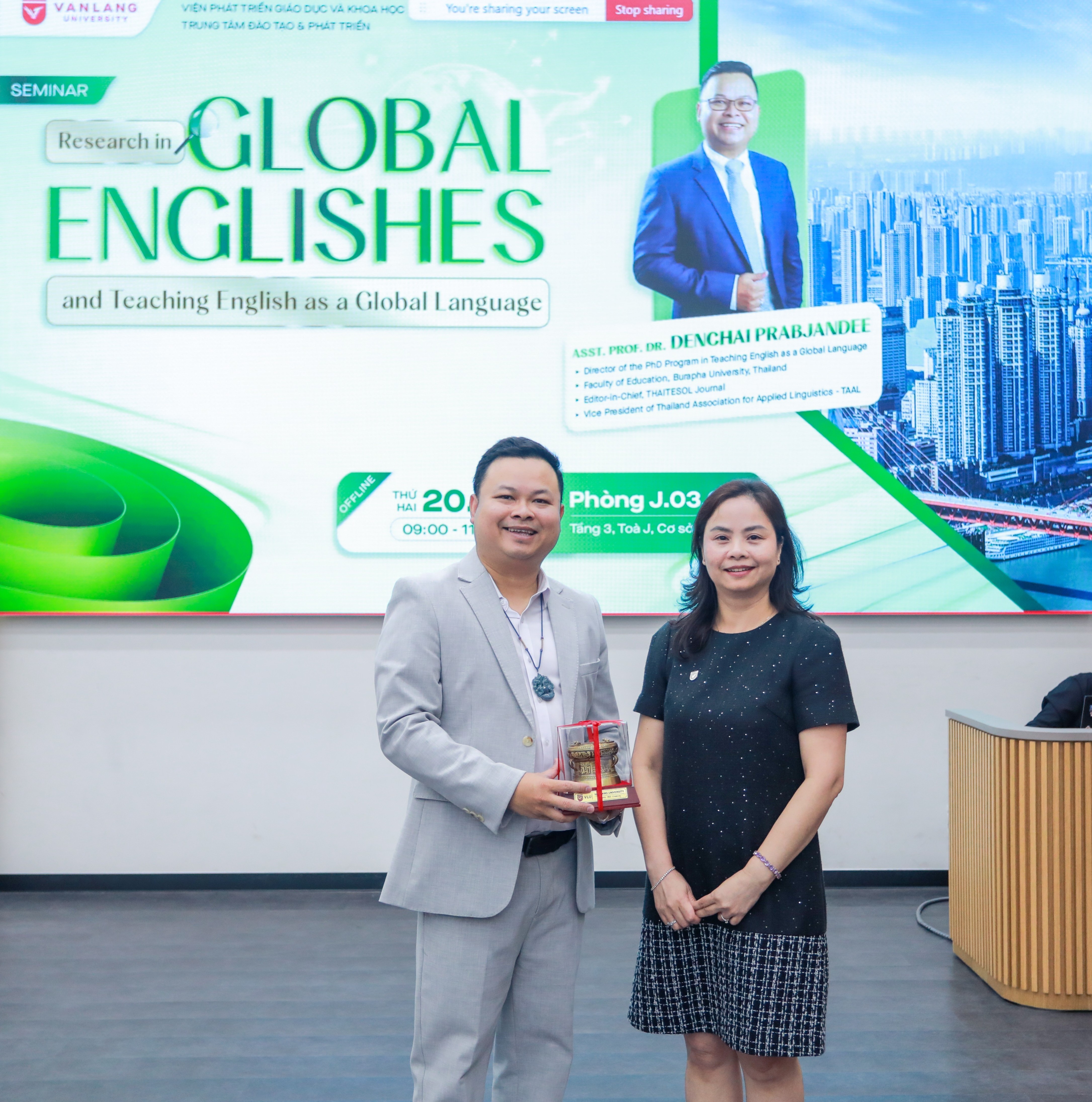
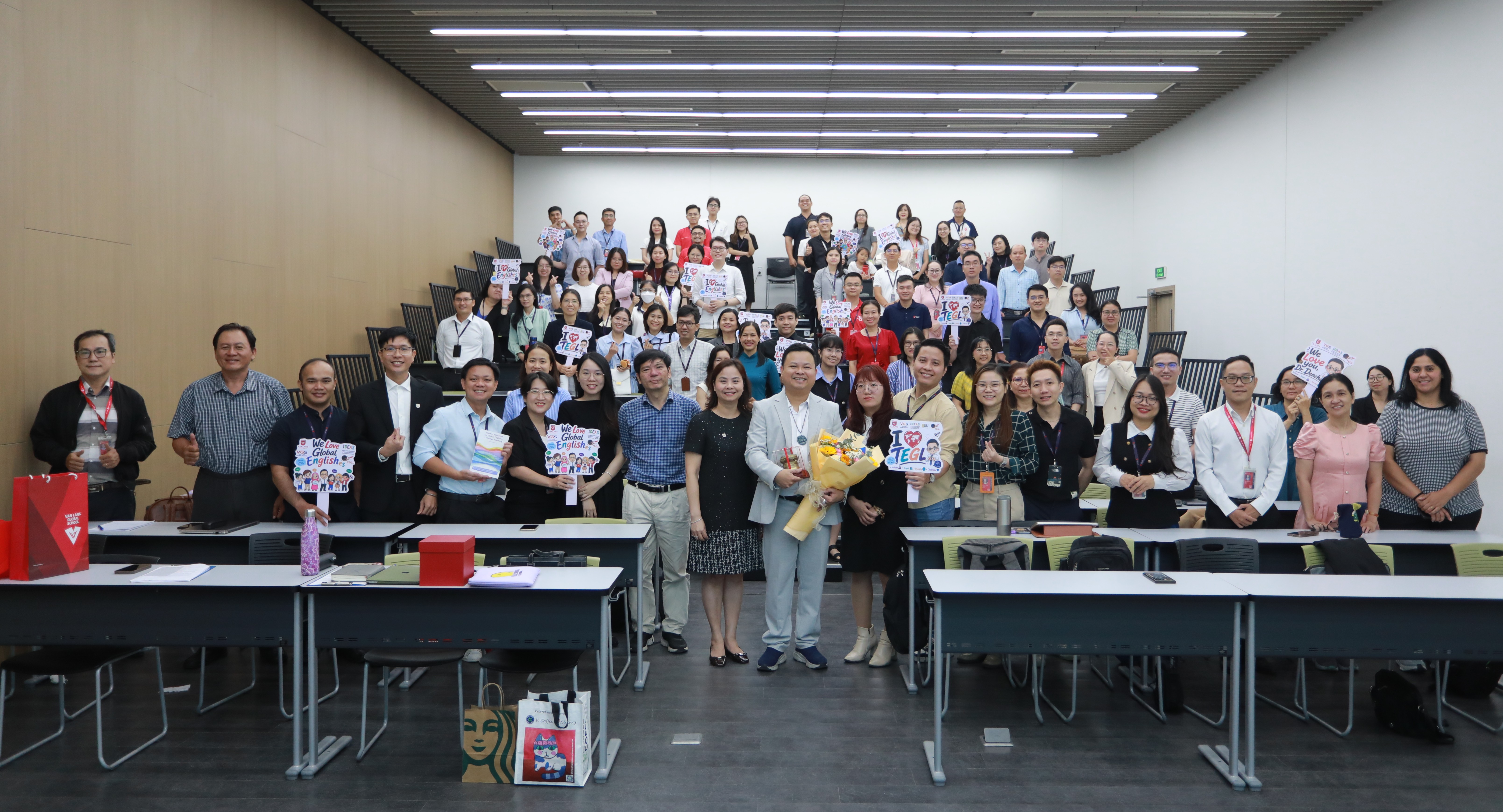
On July 20, 2026, the Institute for Educational Development and Applied Social Sciences (IDEAS), in collaboration with the Center for Training and Development, hosted the seminar titled “Research in Global Englishes and Teaching English as a Global Language.” The event provided updates on emerging research trends in Global Englishes while exploring pedagogical applications of these perspectives within multilingual and multicultural learning environments.
The seminar was led by Associate Professor Dr. Denchai Prabjandee, Director of the Ph.D. Program in Teaching English as a Global Language at the Faculty of Education, Burapha University (Thailand). He also serves as the Editor-in-Chief of the THAITESOL Journal and Vice President of the Thai Association for Applied Linguistics (TAAL).
The event also honored distinguished guests, including:
- Dr. Huynh Trong Luan – Vice Dean in charge of Scientific Research and International Cooperation, Faculty of Foreign Languages, Ho Chi Minh City University of Technology and Education (HCMUTE)
- Dr. Nguyen Vu Thuy Tien and MSc. Nguyen Thi Khanh Phuong – Lecturers at the Faculty of Foreign Languages, Ho Chi Minh City University of Technology and Education (HCMUTE)
- Associate Professor Dr. Safa Elnaili from the University of Alabama (USA)
The seminar attracted a wide range of lecturers, researchers, and educators from Van Lang University, Binh Duong Economics and Technology University (BETU), Phuong Dong University, alongside partner institutions.
Viewing English Through the Lens of User Diversity
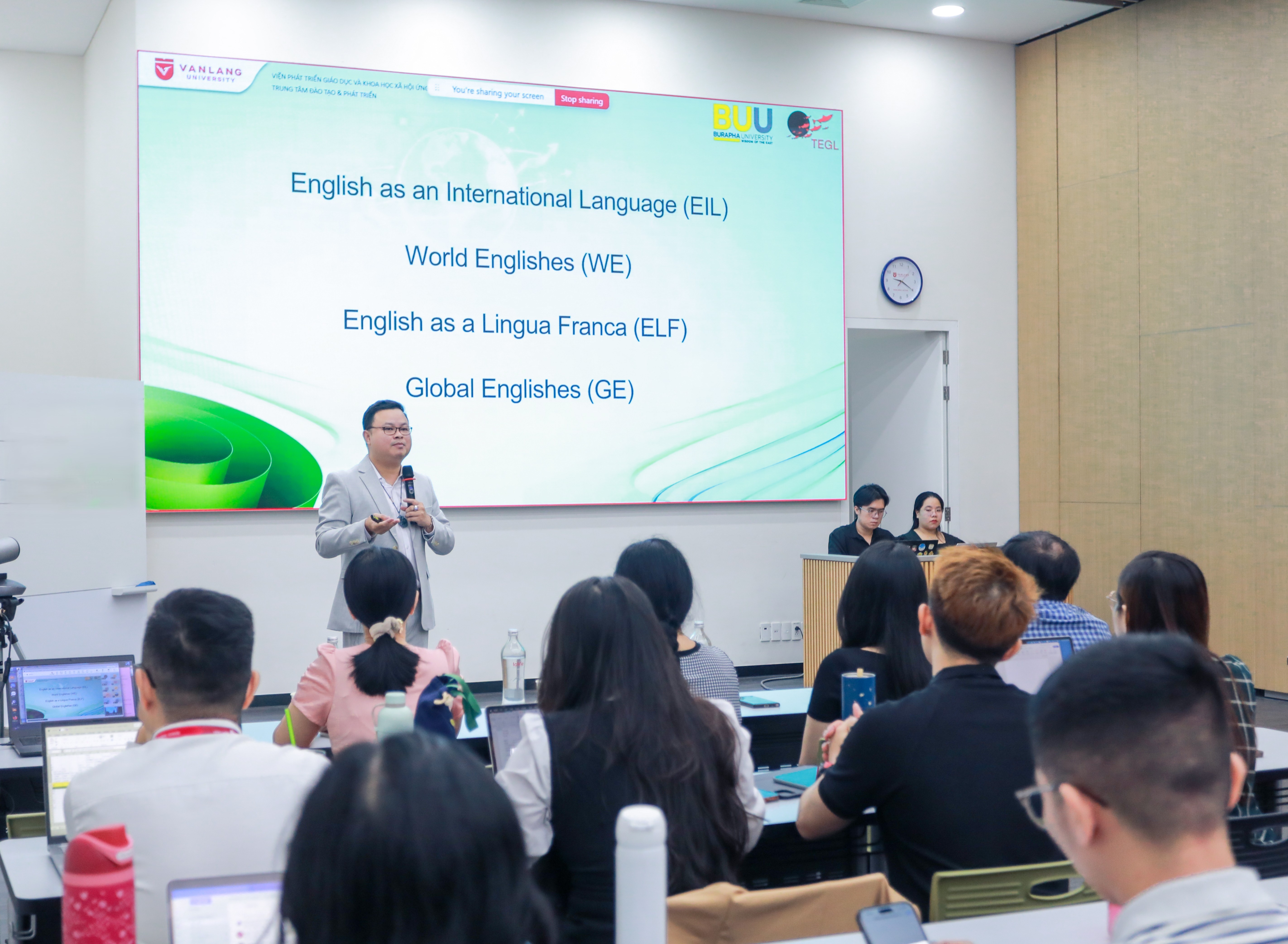
The seminar was structured into two sessions. In the first session, the keynote speaker introduced the concept of Global Englishes and the development of major approaches in global English research, including English as an International Language (EIL), World Englishes (WE), English as a Lingua Franca (ELF), and Global Englishes (GE).
According to the presentation, EIL views English as an widely-used international language across diverse global communities. WE emphasizes the existence and intrinsic value of localized English varieties shaped by distinct national and cultural contexts. ELF focuses on the use of English as a common medium of communication among non-native speakers, prioritizing mutual intelligibility and communicative effectiveness over strict adherence to a single standard pronunciation. Global Englishes builds upon these frameworks to examine English in relation to linguistic diversity, cultural variance, and global communication needs.
Through these discussions, the seminar offered an inclusive perspective on English in the era of globalization, where the language increasingly functions as a shared communicative tool among individuals from diverse linguistic and cultural backgrounds. Consequently, the seminar highlighted the imperative of integrating Global Englishes perspectives into English Language Teaching (ELT), aiming to foster effective communication competence within the global English-speaking community rather than exclusively focusing on native-speaker norms.
From Research Trends to Pedagogical Practice
In the following session, the speaker analyzed methods for integrating Global Englishes perspectives into English Language Teaching (ELT). Alongside introducing three primary approaches - the Content-focused Approach, the Integrated Approach, and the Exposure Approach - the speaker also highlighted key challenges encountered during practical implementation.
Beyond implementation strategies, the discussion session identified obstacles that may arise in practice. These include a shortage of suitable teaching materials; language assessment methods lagging behind evolving instructional objectives; the need for teacher training and professional development; ingrained perceptions prioritizing a single "standard English"; and teacher recruitment criteria that remain heavily influenced by traditional frameworks.
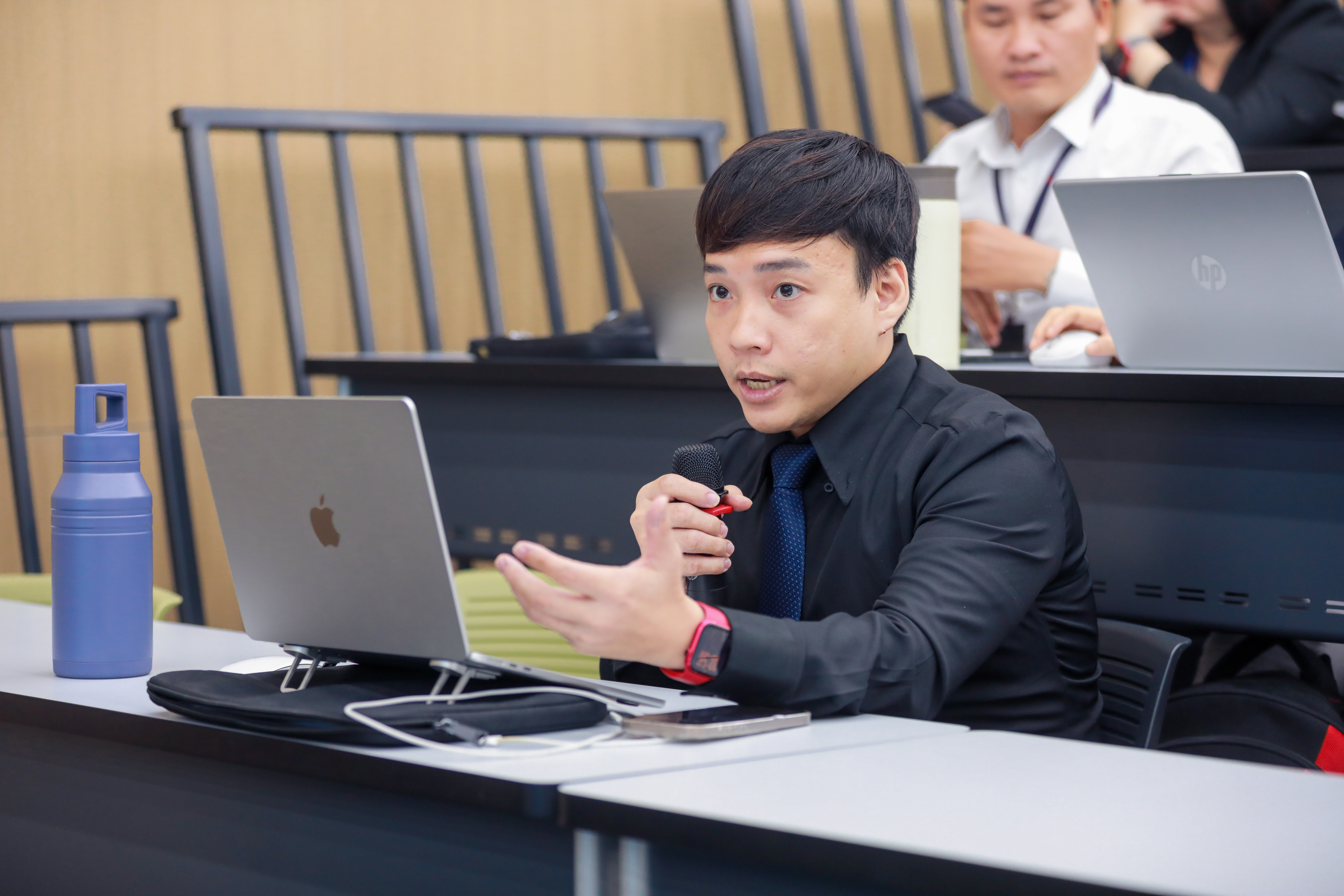
These challenges demonstrate that integrating Global Englishes into the classroom goes beyond simply adding new content. The implementation process demands a synchronized alignment across instructional materials, teaching methodologies, assessment frameworks, and faculty expertise. Consequently, the seminar provided a solid foundation for educators to consider progressively integrating Global Englishes perspectives into their curricula, tailored to institutional contexts and the communication needs of multilingual and multicultural environments.
Expanding Academic Exchange and Networking
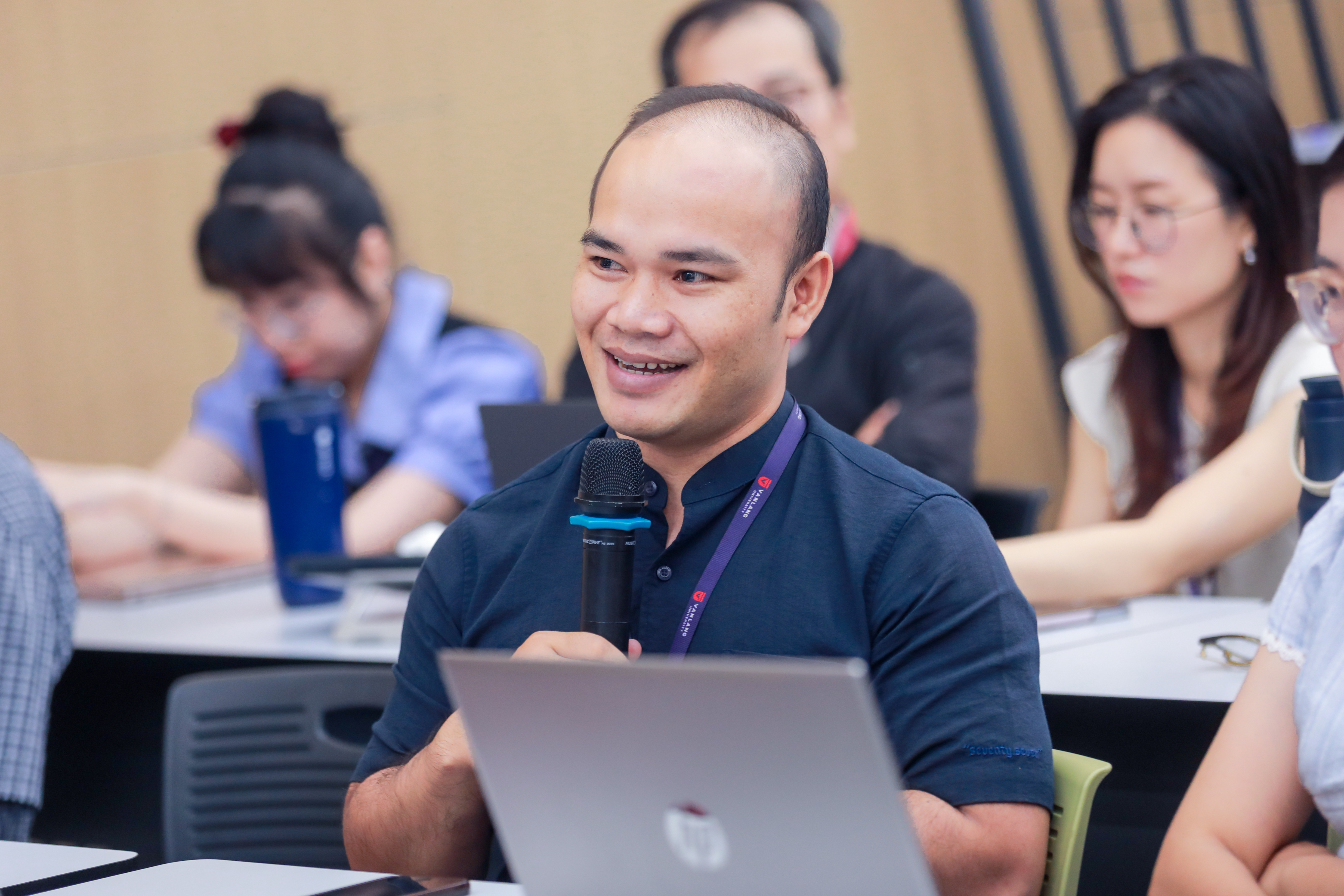
Through the seminar, lecturers and researchers had the opportunity to update themselves on the latest research trends in Global English and Teaching English as a Global Language, share teaching and research experiences, and expand their academic networks with international experts.
The event also contributed to fostering academic exchange within the field of language education at Van Lang University. The topics discussed provide a valuable reference for faculty members as they continue to review and refine their selection of instructional materials, classroom activity design, and assessment methods, aligning them more closely with the practical use of English in a globalized context.
News: Institute for Educational Development and Applied Social Sciences (IDEAS)
Tags
