
Prof. Tran The Truyen (Deakin University, Australia): Artificial intelligence replaces tasks, not people


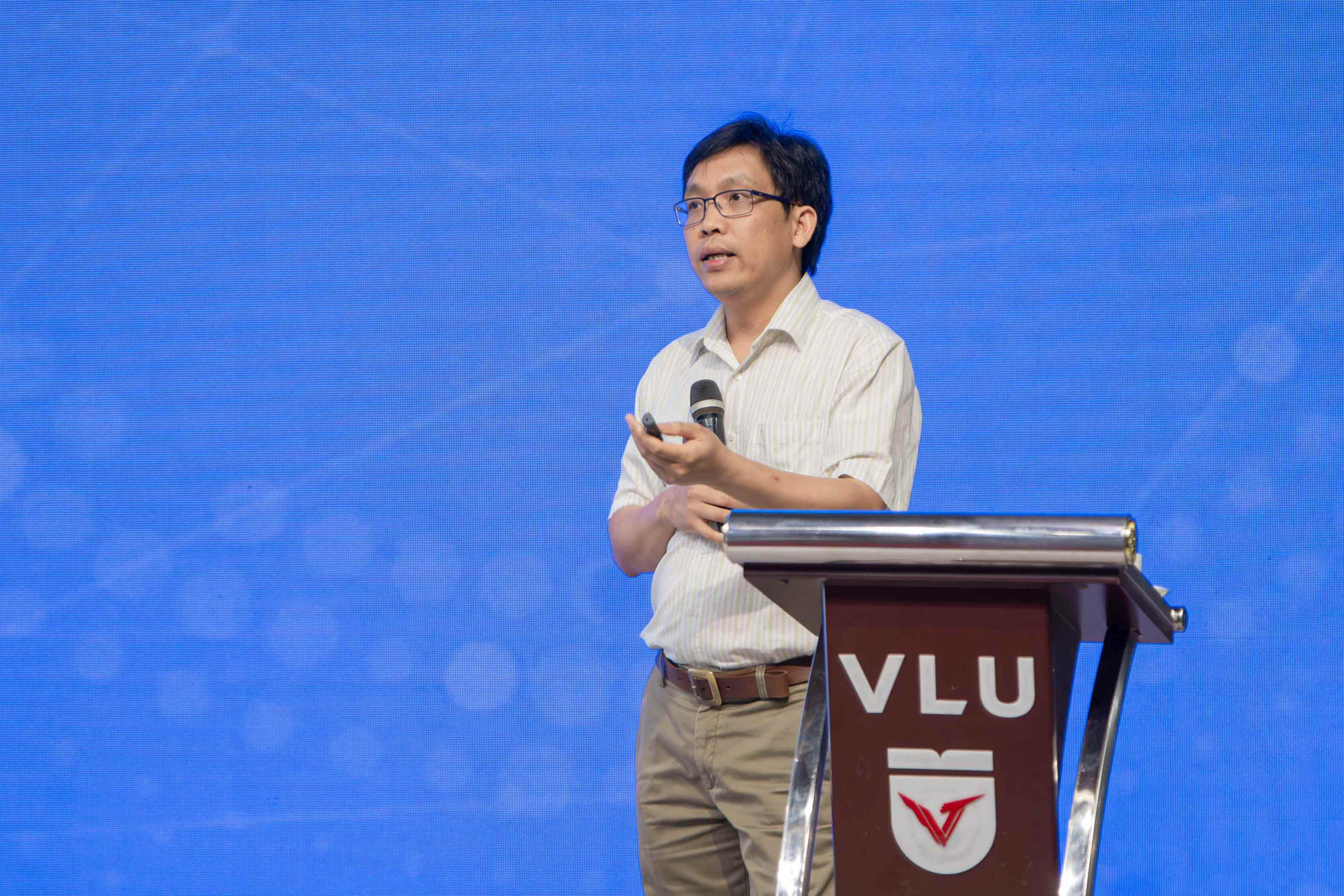
On December 17, 2025, at Van Lang University, Prof. Tran The Truyen — Head of AI in Health & Sciences at the Applied Artificial Intelligence Initiative, Deakin University (Australia) — delivered a public lecture titled “Recent Advances of AI in Biomedicine.” On this occasion, Van Lang University (VLU) had the opportunity to engage in an in-depth conversation with Prof. Truyen, one of the leading experts in artificial intelligence, to explore his perspectives on the development trajectory and application potential of AI in the biomedical field today.
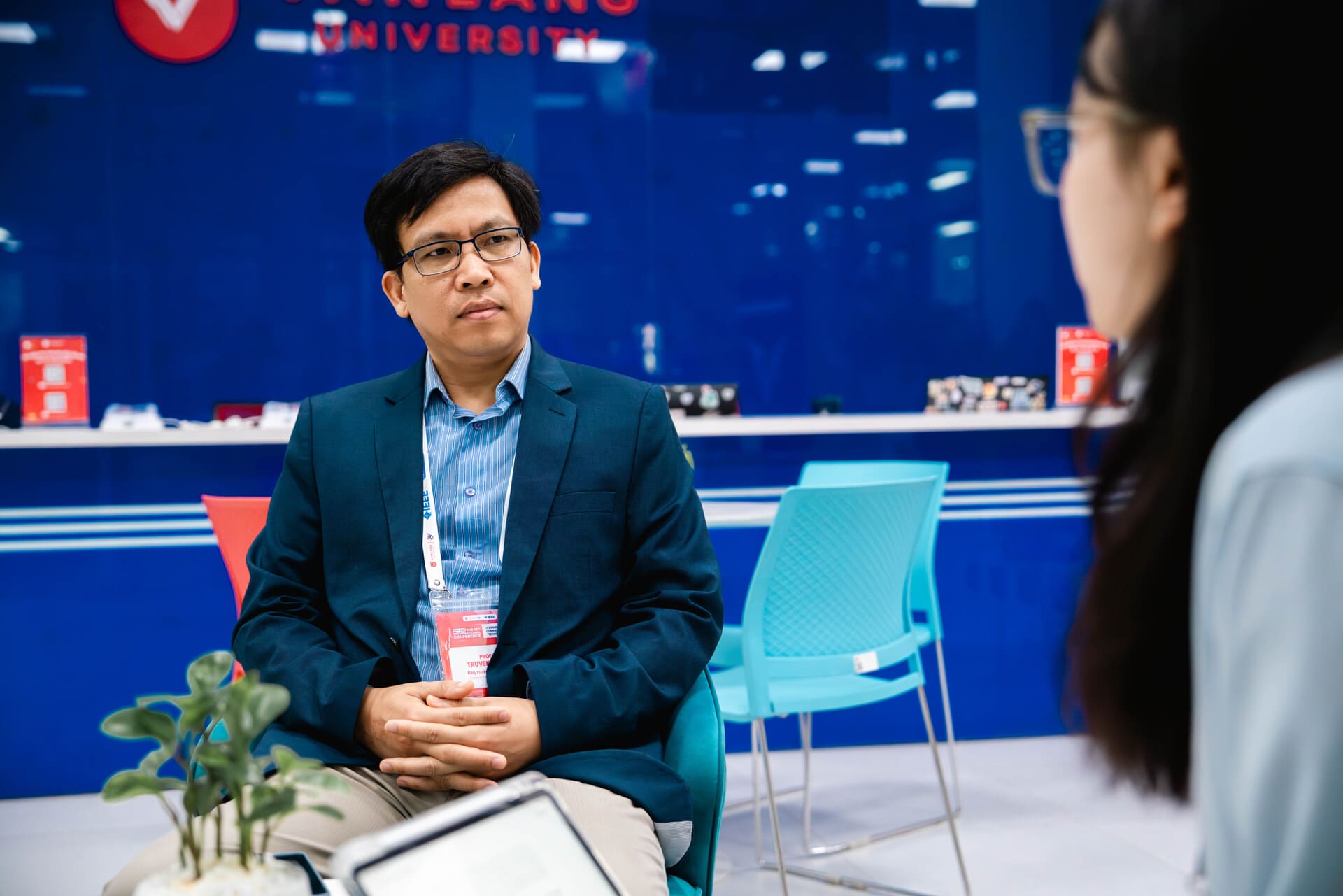
During the conversation, Prof. Truyen brought out professional insights into the transformative potential of AI in reshaping biomedicine, from scientific discovery to drug design. Alongside discussions on opportunities and challenges for AI development in Vietnam, he also offered practical guidance for VLU students who want to pursue careers in this field.
* Greetings, Prof. Truyen! Thank you for taking the time to join this dialogue. We hope that your visit to Van Lang University has been a meaningful experience.
Professor, how do you feel when coming here to share knowledge on AI in the biomedical field? And what are your impressions of the University’s faculty and students during your visit?
Upon receiving the invitation to join this dialogue at Van Lang University, the topic chosen was “Recent Advances of AI in Biomedicine.” This choice stemmed from its close alignment with ongoing research directions, as well as the belief that biomedicine represents one of the most impactful applications of AI, with direct implications for humanity in the near future. Van Lang University, firstly, left the impression of a young, dynamic institution, with enthusiastic students, a vibrant academic environment, and modern facilities. Through interactions with faculty members during the seminar, there was a strong sense of aspiration toward international standards and meaningful societal impact. These impressions were formed over just a few days of academic engagement at the University.
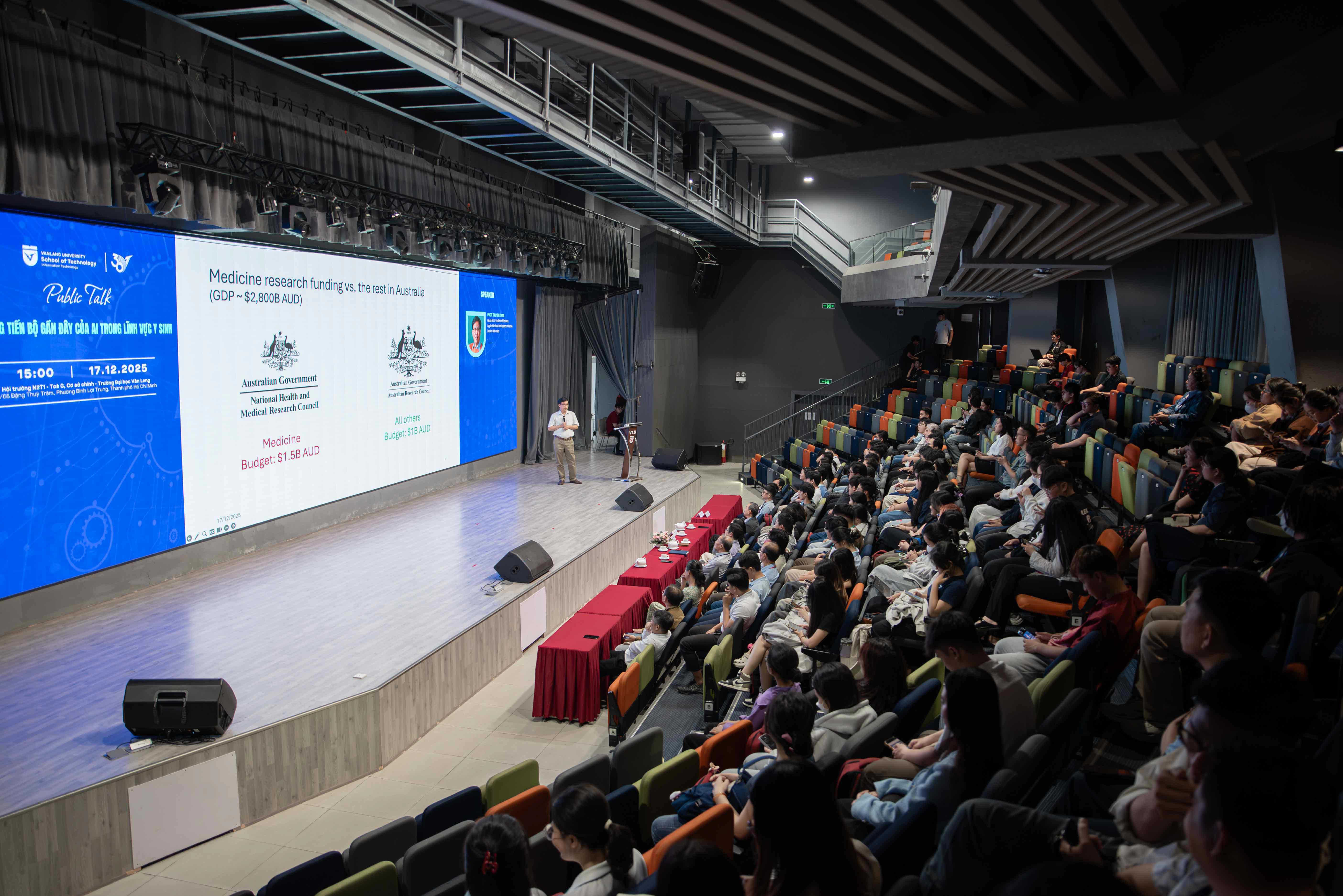
* According to OpenAI’s five levels of AI development, where does the global biomedical field currently stand, and how long might it take to reach the level of “assisting invention and discovery” (Level 4)?
Biomedicine is a very broad field, and all five levels of AI development can contribute to advancements across different areas. In terms of scientific discovery (Level 4), AI has in fact been involved in biomedical discovery for approximately 3 decades, at varying levels of sophistication. Recent AI advances have opened new opportunities, as today’s AI possesses strong computational and exploratory capabilities, supporting humans in information processing, reasoning, inference, and planning — which were previously limited. In many areas, AI performance is now comparable to human-level capability.
At present, the world has not fully reached Level 4. However, AI has already begun assisting scientists in achieving significant discoveries. A previously cited example is a drug developed for idiopathic pulmonary fibrosis. Six years ago, the drug was successfully tested on animals — specifically mice, as animal testing is a mandatory stage in drug research. After six years, it has now been approved for human trials. This is an encouraging outcome, given the complexity of regulatory approval processes, especially considering that the drug was entirely designed using AI. This serves as concrete evidence that AI is already playing a genuine role in scientific discovery.
* How do you assess the role of biomedical engineering as a bridge between AI technology and medical practice? What new research directions are emerging from predictive and generative AI models in biomedicine?
First off, biomedicine encompasses a wide spectrum of knowledge, ranging from fundamental biological discovery through multiple intermediate stages to clinical practice. So AI can contribute at every stage, starting from scientific discovery. For instance, AI is now deeply involved in understanding protein structures, predicting protein behavior, or even designing proteins. However, transitioning from discovery to clinical practice involves many additional challenges, such as medical imaging diagnostics, patient communication, and generating clinical reports.
AI can also play a role in psychological counseling. In educational environments, depression has become a serious concern. In such cases, AI can serve as a confidential listener for young people who want to share their feelings without disclosing their mental state to others. In this respect, AI can truly play a positive and supportive role.
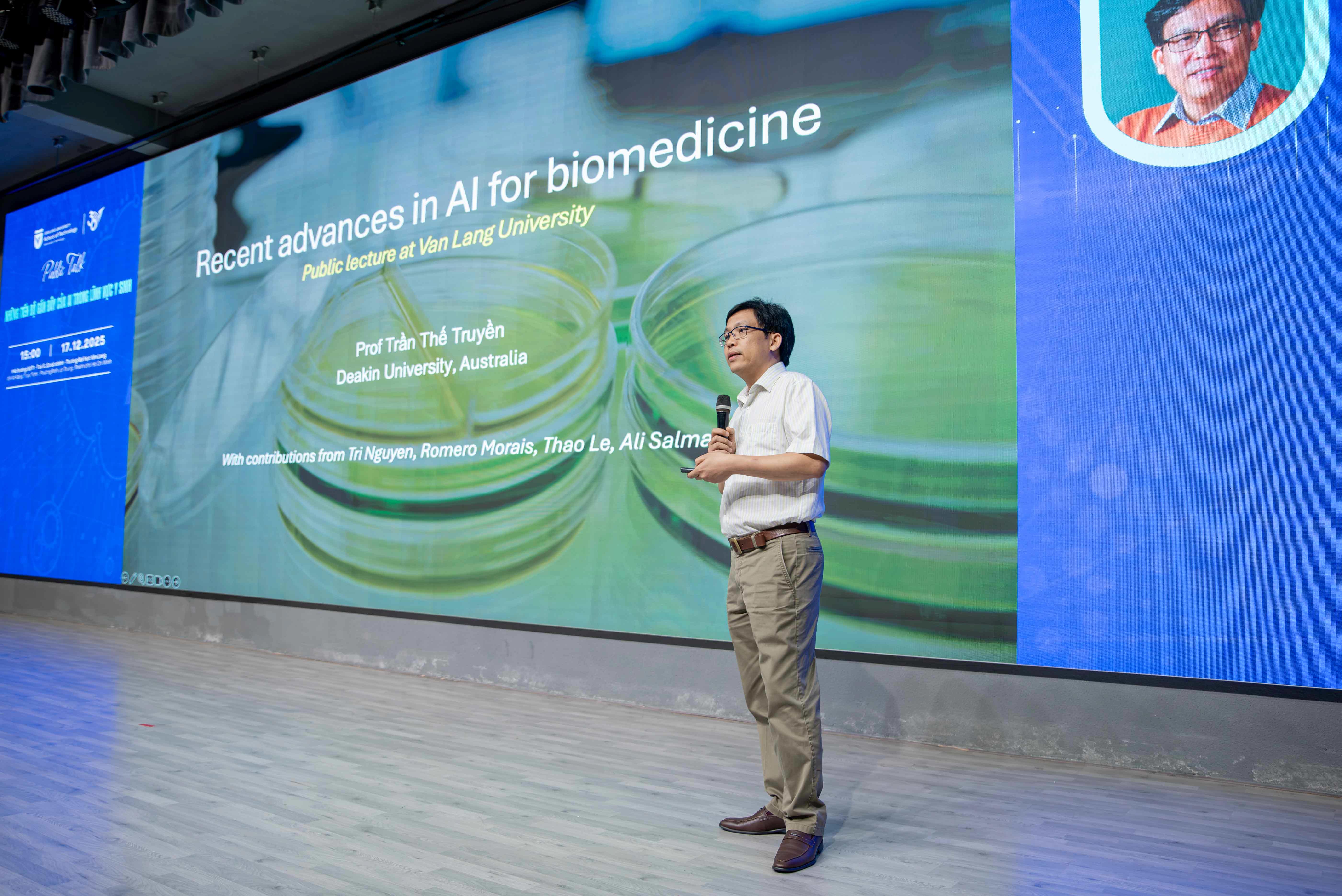
* In practical implementation, what scientific and ethical risks require special attention when applying AI in biomedicine?
Biomedicine is a particularly sensitive field because it directly involves humans and animals at various levels, all of which raise ethical concerns. Therefore, the highest priority when using AI in this field is to ensure that no harm is caused to animals or humans. Like any technology, AI carries inherent risks if misused.
These risks are especially amplified by AI’s computational power and capabilities. Given its increasing intelligence, humans must remain cautious, especially when AI-generated suggestions exceed human oversight. Ethical boundaries, operational limits, and risk-control mechanisms must be clearly defined from the outset and applied consistently throughout the discovery process and clinical application.
At every stage, AI must be supervised by humans. In clinical practice, the principle is clear: humans make the final decisions, while AI serves a supportive role. In scientific discovery, particularly at early stages, AI may offer revolutionary ideas. Whether such ideas are beneficial or harmful ultimately requires human judgment, supported, but never replaced, by AI-driven evaluation mechanisms.
* You have stated that AI replaces “tasks,” not “the whole human entity. Could you elaborate on the uniquely human values that biomedical AI can never fully replace?
This remains a subject of philosophical debate. From a computational standpoint, AI is theoretically unlimited. If scientific problems are viewed purely as computational processes, AI faces no inherent constraints. However, for humans, issues of ethics, philosophy, or emotion remain defining characteristics. To say that AI can not reach those levels isn't entirely true, because in fact, there are some problems that AI can offer very insightful suggestions for.
Whether AI can “reach” these aspects depends largely on how they are defined. AI does not possess intrinsic emotions, as it is fundamentally a computational system. Yet AI can simulate emotions so convincingly that humans may struggle to distinguish between genuine and artificial expressions.
If a robotic companion were to perfectly replicate human appearance and emotional expression, distinguishing authenticity would become increasingly difficult. At that point, do we still call AI unemotional? It is really hard to tell. While this remains speculative, such a future may not be far away. Ultimately, the core issue lies in defining the limitations of AI and determining how far humans are willing to allow it to go. All technologies carry risks, and it is humanity’s responsibility to establish appropriate boundaries.
* With experience working in advanced countries such as Australia, what do you see as Vietnam’s greatest advantage in entering the race to apply AI in biomedicine?
Whether it is AI or new technologies, beyond technological foundations, human and talent remain the most critical factor. In the field of AI, talent exists at multiple levels. The first group are those who invent new methods for others to pursue and apply. The second group builds foundational platforms that others can develop based on them. And the third one, who applies these platforms in real-world contexts.
Nowadays, rapid technological development gives young people a distinct advantage, which is also Vietnam’s strength — a large, youthful population with fast learning capacity and improving practical skills. Vietnam also benefits from a solid foundation in mathematics and STEM education, particularly at the high school level and within engineering disciplines at universities.
However, transforming these advantages into elite-level expertise and international impact requires a long-term journey. While Vietnam excels in technology adoption and application, stronger ecosystems and mechanisms are needed to nurture high-level talent capable of generating global influence.
* For students pursuing practical AI projects in biomedicine, what advice would you offer on balancing technical knowledge and domain expertise?
To succeed in any field, a fundamental understanding of the domain is essential. You can not apply any tools or technologies without a bit of understanding. Applying technology without domain knowledge often leads to misuse in wrong contexts, inefficiency, or even harm — it can require more effort than not using technology at all as well.
Equally important is communication. Technologists must be able to communicate effectively with domain experts. Technical language alone cannot bridge this gap. Understanding what doctors need and what patients expect is crucial before technology can be effective. Technology can not close that gap itself. There has to be an initial interpersonal understanding, then technology takes over.
Problems should be clearly defined before seeking solutions. Without understanding the problem, even the best solutions may fail. In order to determine problems, technologists need to grasp expertise issues, or at least, appropriate knowledge to converse with experts in said fields.
In practice, the greatest challenge — and the determining factor for success — lies not in technology itself, but in bridging communication and understanding between domain experts and technologists. Many assume that technology can address the problems by itself, which is appealing theoretically. But in reality, the biggest challenge is how to effectively communicate and gain expert insights.
* What core message from the lecture “Recent Advances of AI in Biomedicine” would you hope Van Lang University students will translate into future community-oriented projects?
I chose this topic to convey: Health is a nearly eternal concern of humanity. As societies become wealthier and people live longer, health becomes an increasingly central issue. Regardless of one’s chosen field, the conversation ultimately returns to health.
For those seeking a meaningful, long-term career with resilience against obsolescence, healthcare is one of the few fields that offers job purpose, values of life, long-term prospects, and interdisciplinary integration. Healthcare is where most human advancements converge and are applied. Just by stepping into a hospital, you can see nuclear technology, AI, robotics, materials science, along with other scientific – technological achievements.
So, my message I’d like to deliver to the young is, if you get to choose, healthcare is worthwhile. Even for those not working directly in the field, developing technologies that serve human health remains a deeply meaningful and future-oriented path.
* After participating in recent lectures and conferences, how do you assess the educational ecosystem that Van Lang University has built to support holistic student development?
I have approached the ecosystem mostly from a science and technology perspective up til now. There’s not been direct involvement in other teaching activities yet but my initial impressions of Van Lang University highlight strong investment in facilities. With a large scale and student population, the University benefits from diverse learning spaces and services that smaller institutions may lack.
In particular, facilities supporting the arts stand out as a major advantage, offering students hands-on learning environments aligned with real-world practice and international standards. As education continues to integrate, this orientation positions Van Lang University for greater impact and future growth.
Thank you, Professor.
Prof. Tran The Truyen (Bachelor of Science, University of Melbourne, 2001; PhD in Computer Science, Curtin University, 2008) is one of Australia’s leading AI researchers and currently serves as Head of AI in Health and Science at Deakin University. He pioneers the development of artificial intelligence capable of reasoning like a scientist and healing like a physician, integrating intelligence, discovery, and healthcare. Prof. Truyen leads three major research programs: • AI Future: Foundational research in abstraction, reasoning, and responsible distributed intelligence. • AI4Science: Development of “AI scientific companions” capable of generating hypotheses, designing experiments, and accelerating breakthroughs in materials, biology, and energy. • AI4Health: Intelligent systems supporting clinicians and personalized healthcare. His research has driven major advances in scientific discovery and medical innovation, from predicting new materials and drugs to supporting early screening for cerebral palsy and advancing mental healthcare. |
News: Khanh Huyen
Photos: Lee Minh Phuong, Khanh Ho
Tags