
Opening Interdisciplinary research directions from the Seminar "The Future of Visual Communication in the Digital Age"


On June 24, 2025, the Faculty of Creative Technology at Van Lang University organised a scientific seminar with the theme “The Future of Visual Communication in the Digital Era.” The event attracted lecturers, experts, researchers, and students from various universities nationwide to share new, interdisciplinary, and highly applicable research directions in the field of visual communication, a rapidly growing field under the influence of digital transformation.
In his opening remarks, Dr. Vo Van Lac, Dean of the Faculty of Creative Technology, stated: “After more than three months of launching, the seminar has received many high-quality papers from universities across the country. We hope this event will become a multi-dimensional academic space, promoting interdisciplinary research between communication, art, and technology.”
Timely issues discussed in three thematic sessions.
The seminar featured 20 discourses, including 6 in-person presentations, divided into three thematic sessions: education and training, culture and heritage, and ethics and arts. In the first session, the presentation by Assoc. Prof. Dr. Huynh Quoc Thang, Senior Lecturer, Member of the Scientific Council, Department of Applied Culture, Faculty of Literature at University of Social Sciences and Humanities, Ho Chi Minh City, focused on the relationship between visual communication, cultural industries, and human resource training in the applied arts sector. He emphasised that visual communication is not only a tool for conveying information but also plays a crucial role in shaping aesthetic, cultural, and economic values in modern society. Other studies, based on student surveys and expert interviews, pointed out that content quality, interactivity, and the technological capabilities of both educators and learners are key factors affecting the effectiveness of visual communication in education.
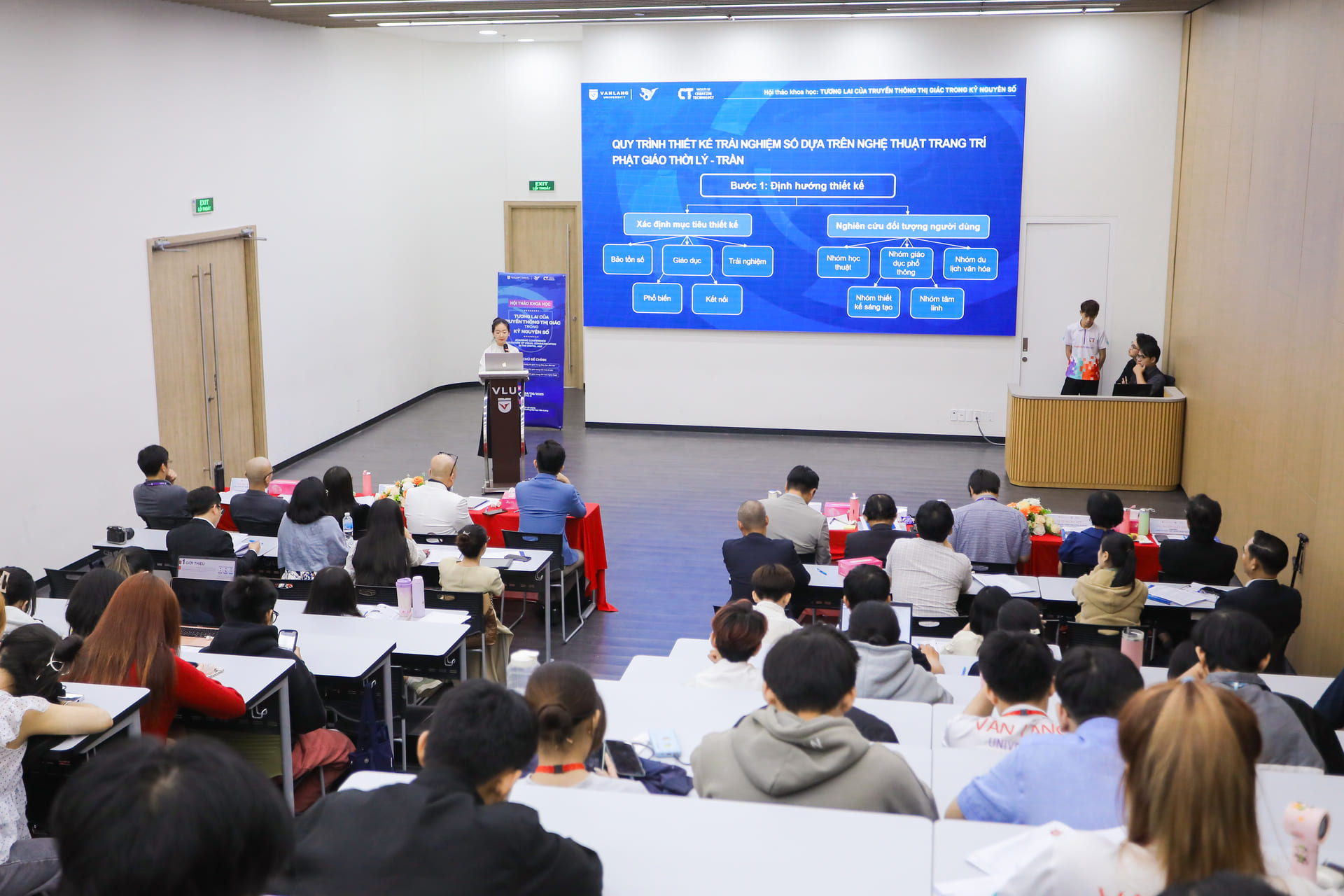
The second session centred on preserving and spreading cultural values through modern visual tools such as multimedia design, augmented reality (AR), and museum digitisation. Dr. Nguyen Duc Son, Head of the Department of Graphic and Digital Design, Greenwich Vietnam, analysed the potential applications of multimedia design in exhibitions and museum archiving. Meanwhile, a research team from FPT University Can Tho presented the AR exhibition project named “Bat Binh Thuong” (Abnormal), which attracted significant interest from young people with messages addressing school violence, gender inequality, and psychological crises. According to surveys, over 90% of participants were satisfied with the AR experience and were particularly impressed with the humanistic messages conveyed by the project.
In the final session, speakers raised concerns about professional ethics amid the rapid development of AI and deepfake technology. They proposed processes for applying technologies such as 3D scanning, VR, and AR to recreate Buddhist patterns from the Ly - Tran dynasties in digital experience design, while also issuing warnings about the growth of deepfake and artificial intelligence (AI) technology.
From theory to practice
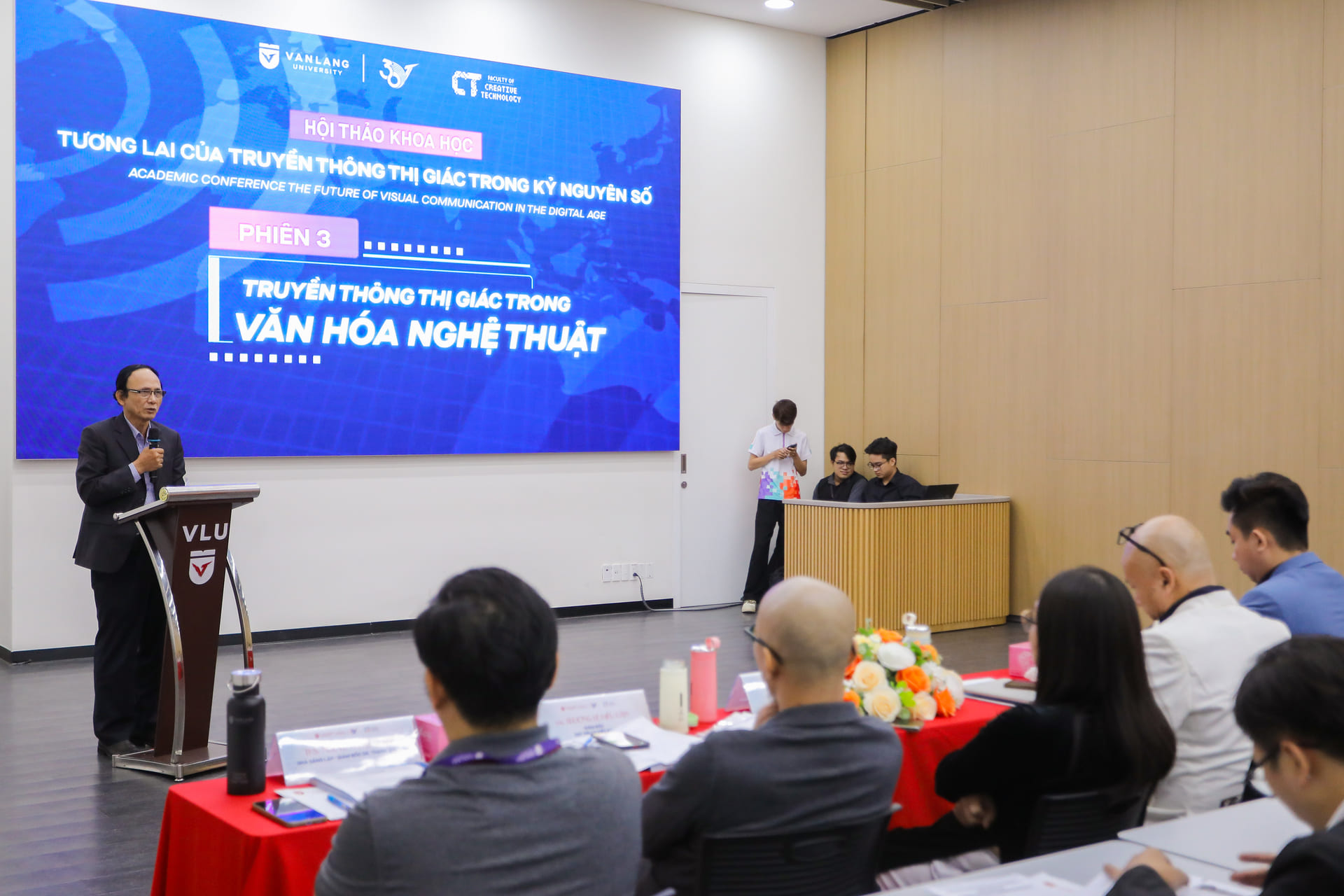
In addition to the presentations, the discussion sessions were lively with participation from numerous experts and businesses. Participants affirmed the central role of visual communication in digital transformation and emphasised the importance of integrating technology, creativity, and ethics in training and research. Notably, the sessions addressed several contemporary issues, such as: the risk of “AI waste” in teaching without proper orientation, the human role in creativity amid the rise of technology, and the need to build a legal framework to guide the development of visual communication in a humanistic and sustainable direction.
In concluding the seminar, Dr. Vo Van Lac highly appreciated the academic quality and depth of the presentations and discussions. The insights shared will be compiled and incorporated into the direction of training and scientific research at both undergraduate and postgraduate levels, contributing to the development of visual communication as a rich, interdisciplinary academic field in the digital age.
News: Trung Truc
Tags