
Managing Budgets and Identifying Online Scams: Equipping Students with Financial Skills


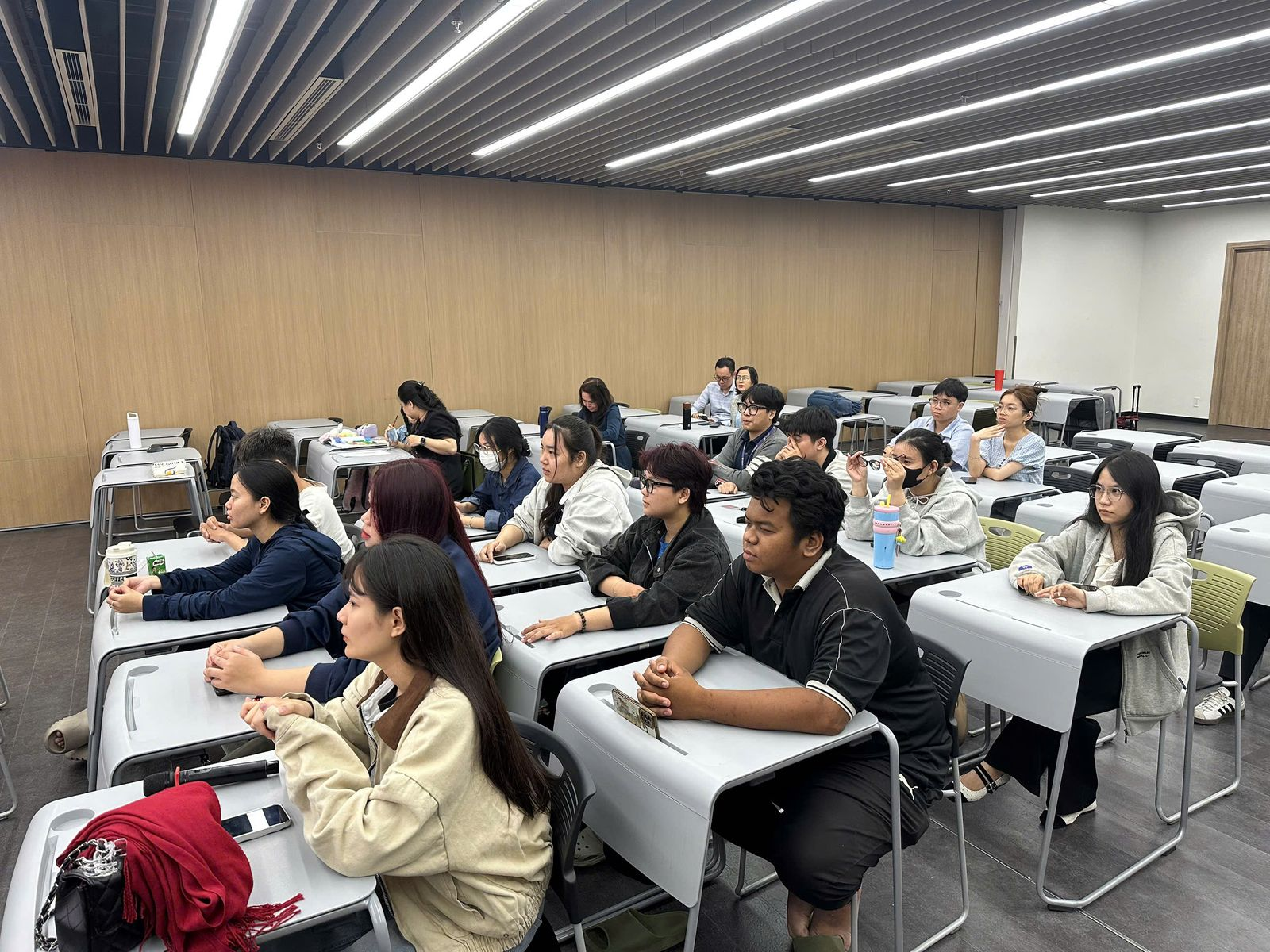
On the afternoon of July 4 2026, Van Lang University organized a thematic session on “Budget Management and Identifying Online Scams” at Room CS3.J.05.03, Department of General Management of Faculty of Business Administration. This session provided students with practical knowledge of personal financial management while strengthening their awareness and skills in preventing financial scams in the digital environment.
As online transactions become increasingly prevalent, proactively managing cash flow and developing the ability to identify potential risks have become essential skills for young people. The thematic session focused on two key areas: personal financial management and financial scams in the digital environment.
Personal financial management: Taking control of your cash flow through small habits
The first topic was presented by Mr. Doan Hoang Quan, focusing on fundamental principles to help students develop proactive and well-planned financial management habits.
Through a four-step process, students were guided on how to approach budget management in a systematic way:
Set SMART goals – Estimate income – Budget expenses – Track and analyze variances
Setting clear goals from the outset provides a foundation for allocating resources appropriately, while tracking and analyzing expenses helps individuals identify unnecessary spending and adjust their financial plans in subsequent periods.
In addition, the speaker introduced two practical principles that can be easily applied to student life.
“Pay Yourself First” - prioritize a portion of your income for savings before allocating money to other expenses. This approach helps build a saving habit and reduces the tendency to save only whatever remains after spending.
The “48-Hour Rule” was introduced as a simple way to manage impulse purchases. Rather than making an immediate decision in response to attractive offers online, taking time to consider the purchase allows consumers to reassess their actual needs and avoid unnecessary expenses.
Identifying and preventing online financial scams
The second topic was presented by Mr. Phan Duy Hiep, focusing on the financial risks that students may encounter in the digital environment.
The rapid growth of social media and online platforms has created greater opportunities to access information and conduct transactions, but it has also enabled scams to become increasingly diverse and sophisticated. Platforms such as TikTok, Facebook, and Telegram can be exploited to promote fraudulent projects, create a bandwagon effect, trigger FOMO, or present enticing offers such as “easy work, high pay”.
Young people, in particular, may be more vulnerable when faced with investment or money-making opportunities promising high returns within a short period of time.
Students were therefore introduced to several basic principles for protecting their assets and personal information when engaging in the digital environment:
- Do not provide personal information indiscriminately, especially Citizen ID details or data used for eKYC.
- Never share OTP codes with any individual or organization through unauthenticated channels.
- Do not connect your bank account or e-wallet to links from unknown or unverified sources.
- Carefully check the URL before logging in, providing information, or making a transaction.
- Be cautious of investment and money-making offers that promise high returns but lack transparent information.
Building financial literacy - An essential part of career readiness
Rather than focusing solely on theoretical knowledge, the thematic session aimed to develop practical skills that students can apply directly in their daily lives.
Knowing how to create and manage a budget enables individuals to take greater control of their financial resources. At the same time, the ability to identify suspicious signs in the digital environment can help students reduce their risk of falling victim to increasingly sophisticated scams.
These are also essential skills as students prepare to enter the workforce and lead independent lives. Beyond professional knowledge, financial management skills and awareness of personal data protection can empower young people to make informed, responsible decisions aligned with their long-term goals.
Through thematic sessions addressing real-world issues, Department of General Management of Faculty of Business Administration continues to create learning opportunities that help students broaden their knowledge, develop practical skills, and proactively adapt to changes in the socio-economic and technological landscape.
It is hoped that the knowledge and experiences shared during the session will help students gradually develop sound financial management habits, strengthen their ability to identify risks, and become more confident in protecting themselves against potential scams and pitfalls in the digital environment.
News: Faculty of Business Administration
Tags
