
Global Insight: VLU Master's Students Explore Advanced Tourism Economic Impact Tools with New Zealand Expert.


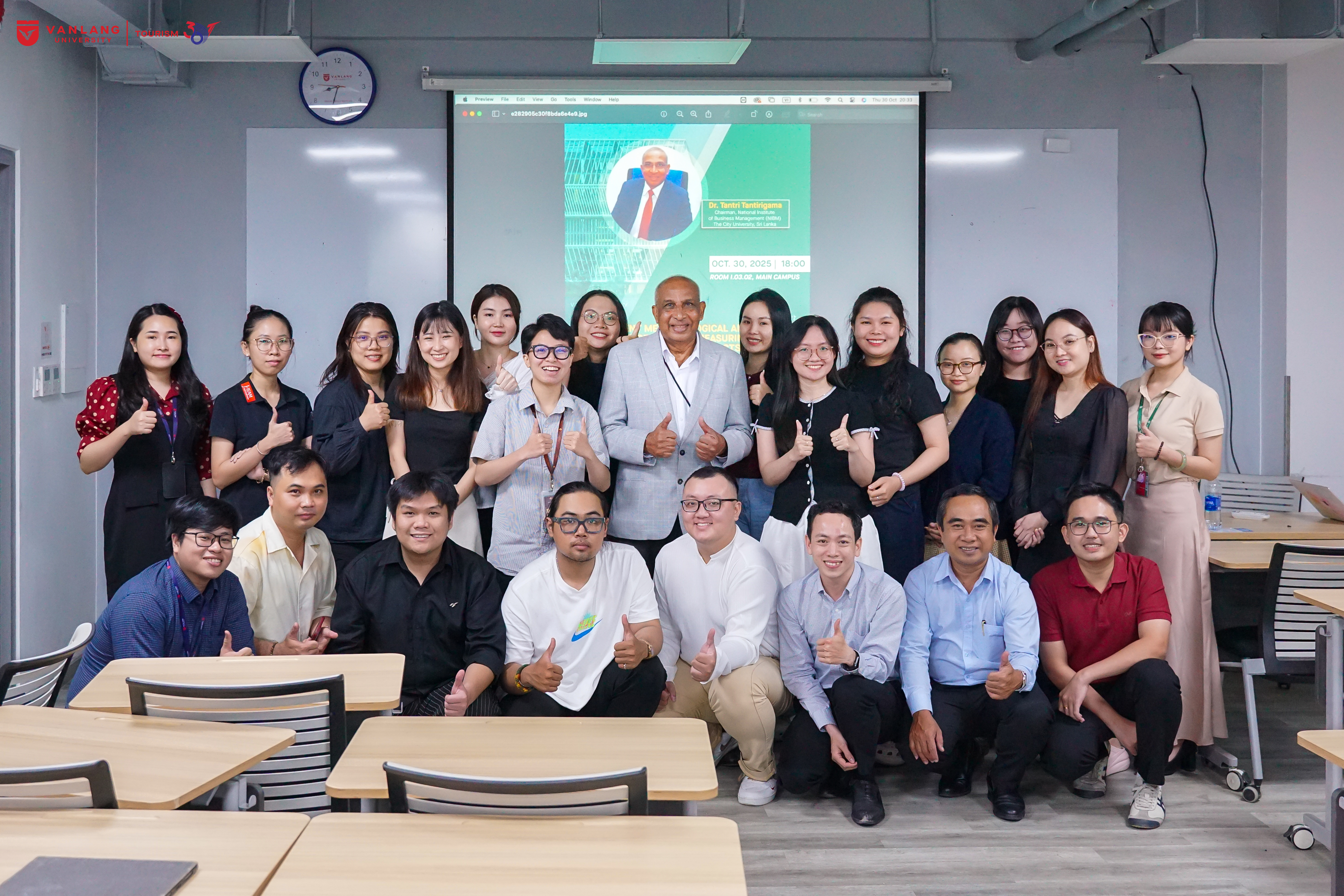
The Faculty of Tourism at Van Lang University recently hosted a pivotal seminar titled "Recent methodological and empirical developments in measuring economic impacts of tourism: Case studies of New Zealand", offering a deep dive into the sophisticated techniques essential for modern tourism policy and strategic foresight. The lecture, held on October 30th 2025, was specifically tailored for the Master's students in the tourism sector.
The insightful session was delivered by Dr. Tantri Tantirigama, a distinguished expert who brings extensive experience as the formerly Senior Economic Statistician at Statistics New Zealand and Principal Economist at the New Zealand Ministry of Transport, and is currently the Chairman of the National Institute of Business Management (NIBM) Sri Lanka.
Key Concepts from the Methodological Spectrum
Dr. Tantirigama's presentation systematically covered the evolution of economic impact measurement, emphasizing the shift from basic estimation to highly accurate, data-driven analysis. The seminar began by tackling the measurement challenge, highlighting that tourism is not a conventional industry but a consumption-based activity fragmented across various sectors like accommodation, transport, and retail. The Tourism Satellite Account (TSA) was introduced as the internationally standardized framework that solves this problem. The core function of TSA systematically links tourism consumption (demand) with the output of traditional industries (supply). The TSA provides crucial macroeconomic aggregates, including the tourism direct GDP - the most important measure of tourism's direct contribution as well as tourism employment, and detailed tourism expenditure breakdowns. The adoption of the TSA methodology is a paradigm shift, transforming tourism into a concrete, measurable, and formidable component of the modern economy, enabling evidence-based policy.
Capturing the Full Picture: Input-Output (I-O) Analysis
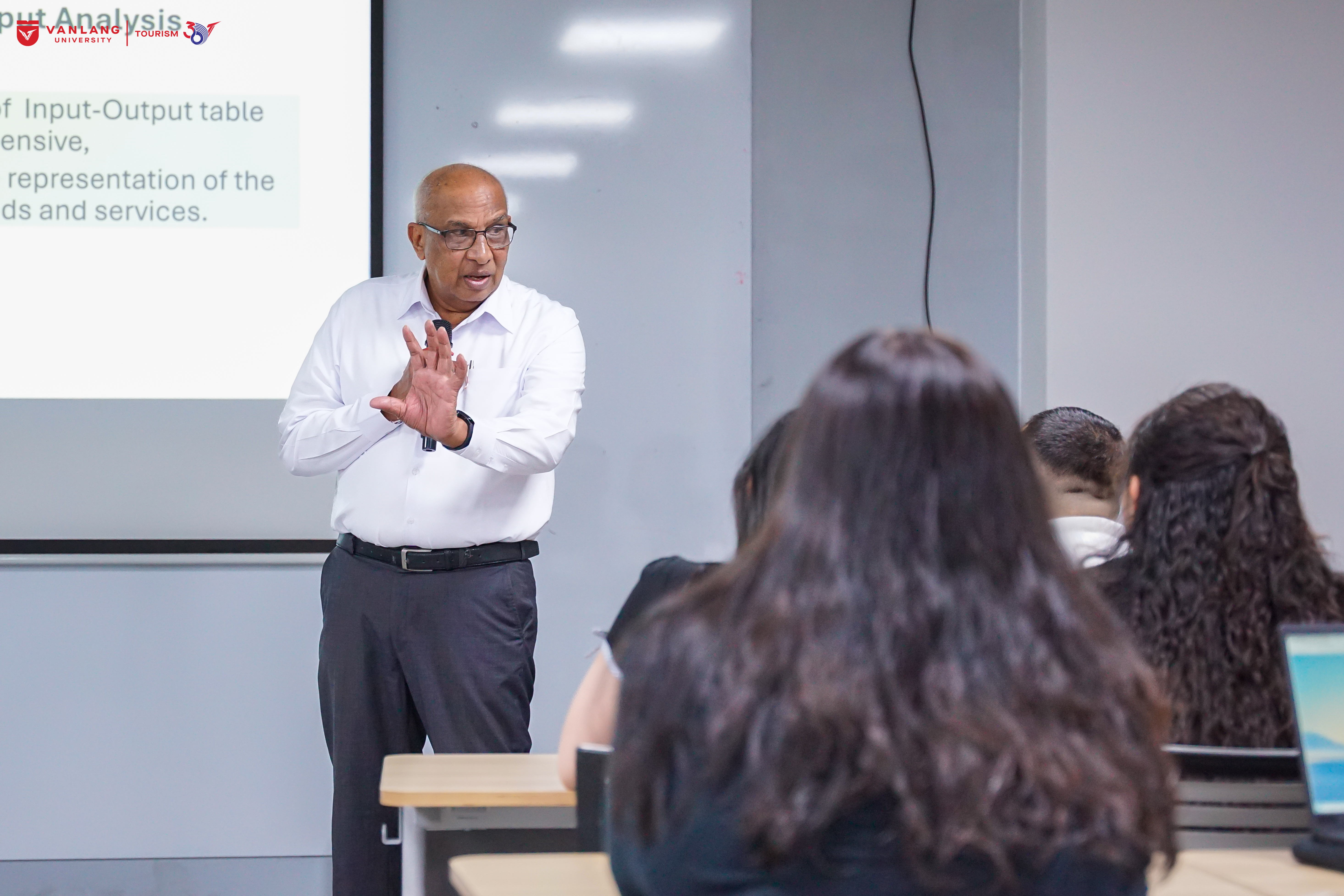
Recognizing the TSA's limitation of only capturing the "direct effects" (the first round of spending), the lecture progressed to I-O analysis for tracing the economic "ripple effect". The I-O table is an comprehensive, quantitative, matrix representation of the flows of goods and services between all sectors of an economy. In addition, indirect effects as well as tourism GDP and employment data contribute to the economic activity generated for each dollar of direct tourist spending. On the downside, this analysis assumes unlimited resources and fixed prices, which can lead to inflexible assessments in volatile environments.
Advanced Foresight: Computable General Equilibrium (CGE) Models
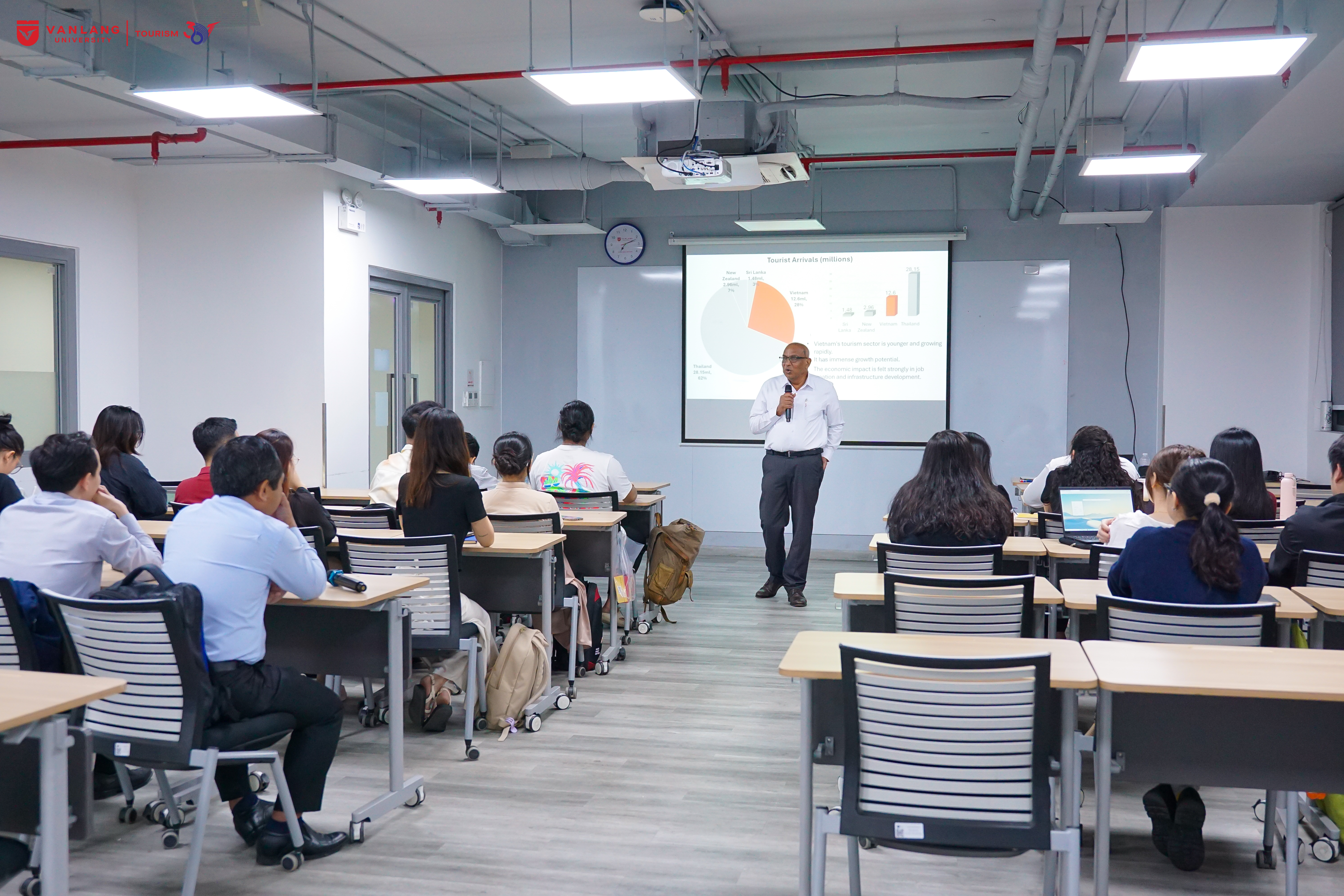
To address the shortcomings of the static I-O model, Dr. Tantirigama introduced Computable General Equilibrium (CGE) Models. This is a dynamic model that simulates the entire economy, accounting for resource constraints, price changes, and market responses. This models are superior for policy analysis because they can show specific phenomena, distinguish between "new" and "diverted" economic activity, model resource competition, and allow for "ex-ante" analysis of policy changes (taxes) before implementation.
Case Study: Lessons from the New Zealand TSA
The seminar used the methodologically sound New Zealand TSA as a prime case study, drawing on Dr. Tantirigama’s direct experience as Team Leader for TSA at Statistics New Zealand.The NZ TSA was essential in proving tourism's importance, often rivaling or surpassing traditional exports like dairy to be recognized as a top export earner. TSA was a strategic tool used for serveral purposes. Firstly, air connectivity negotiations for providing evidence to negotiate new air routes. Second, planning marketing strategy by breaking down tourist spending by market to target the most valuable visitor segments. Thirdly is infrastructure investment by justifying upgrades for regional airports and roading projects. Lastly, crisis management by providing a definitive baseline to measure economic devastation during crises, justifying government support packages.
The seminar provided a comprehensive methodological roadmap, from the foundational visibility of TSA to the interdependencies shown by I-O Analysis, the complexity captured by CGE models, and the real-time accuracy offered by AI and Blockchain. As future leaders, the ability to critically evaluate these methods and leverage new technologies will be crucial in strategically steering Vietnam's rapidly growing tourism economy towards greater value, resilience, and sustainability.
Photo: Hakimmz
News: Jolie
Tags