
Global Higher Education Conference 2026: Shaping the future of higher education in the AI era


As AI has had a profound impact on how we learn and work, higher education needs greater transformation. On 30/07/2026, Global Higher Education Conference 2026 was organized by Van Lang University and Education Malaysia Promotion Centre (HCMC) in order to discuss the theme “Advancing Higher Education in ASEAN for Sustainable Impact”. This event gathered over 260 leaders, experts and business representatives from 14 nations.
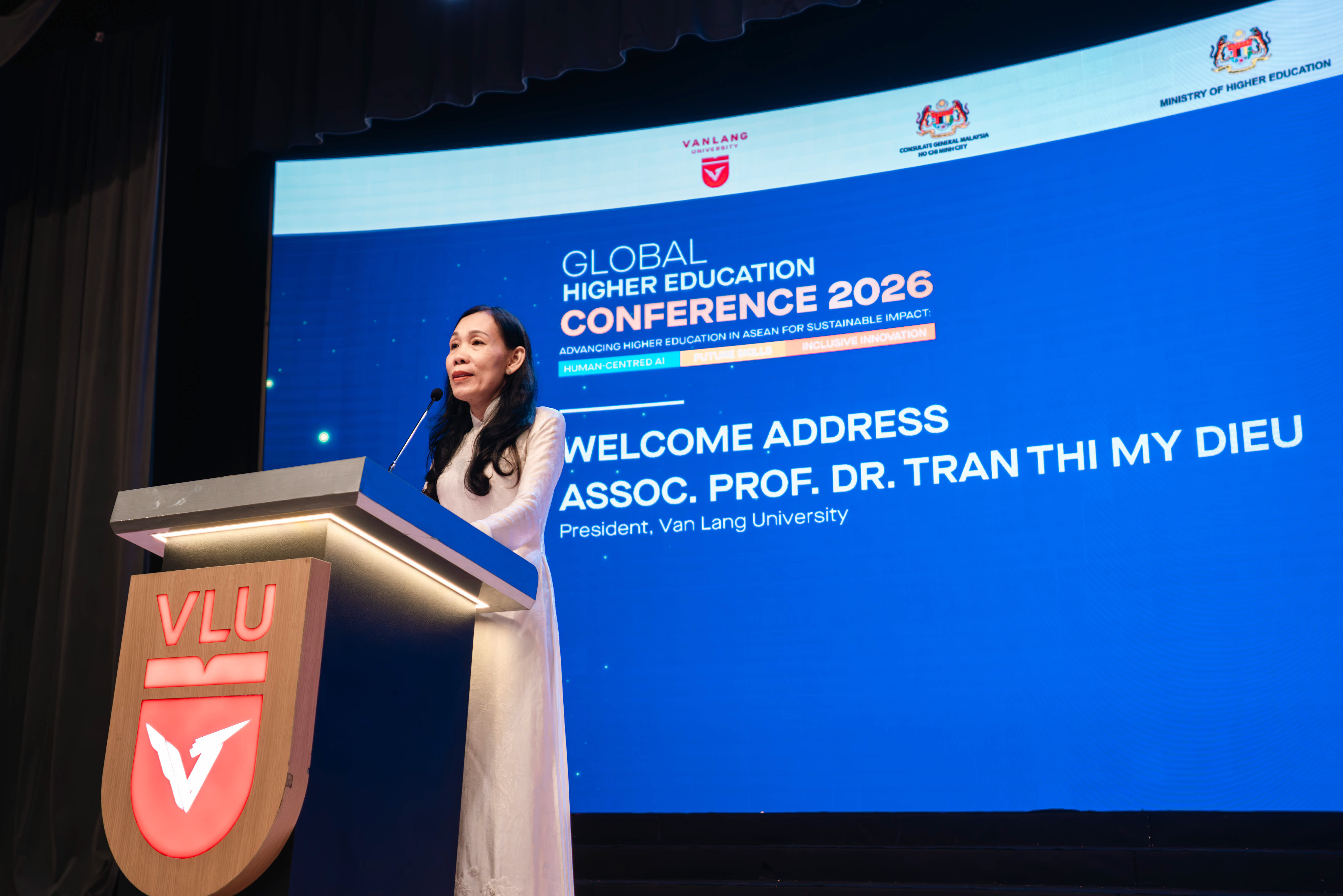
The conference centered around three strategic pillars: Human-centered AI, Future Skills, Inclusive innovation. To mark the opening, Assoc. Prof. Dr. Tran Thi My Dieu stated: “These changes remind us that the true mission of universities has never been simply to transfer knowledge. Our mission is to develop people who can think critically, learn continuously, work across cultures, lead responsibly, and create sustainable positive impact for society.”
Guest speakers, including representatives from the Ministry of Education and Training of Vietnam and experts from MILA University (Malaysia), Nanyang Technological University (Singapore), and RMIT University, all shared the consensus that AI should be viewed as "cognitive capital" to enhance human capability. Instead of worrying about replacement, experts proposed a safe and responsible roadmap for technology integration, thereby developing agile and practical training programs.
The highlight of the conference was in-depth discussion sessions on the future of universities. Assoc. Prof. Dr. Ramesh Zaidi Rozan (University of Technology Malaysia) outlined the concept of "The Infinite University" - where traditional space and time limits are eliminated, replaced by continuous connection between academia and practice. Sharing the same view, Assoc. Prof. Alvin Ng (Nanyang Technological University, Singapore) and representatives from Van Lang also shared about building a modern university ecosystem, where the school acts as a "catalyst" for learners to transform AI into a competitive advantage.
During the discussion session with experts, issues of innovation in higher education were raised, including barriers to information accessibility, output quality, space to inspire imagination, and adaptability. To make universities a true driving force for innovation, experts agreed that the transformation process needs to be approached with systemic thinking, ensuring resonance among four factors: motivation, people, systems, and leadership. The conference closed with thematic sessions delving into international student mobility, regional research cooperation, and borderless innovation models.
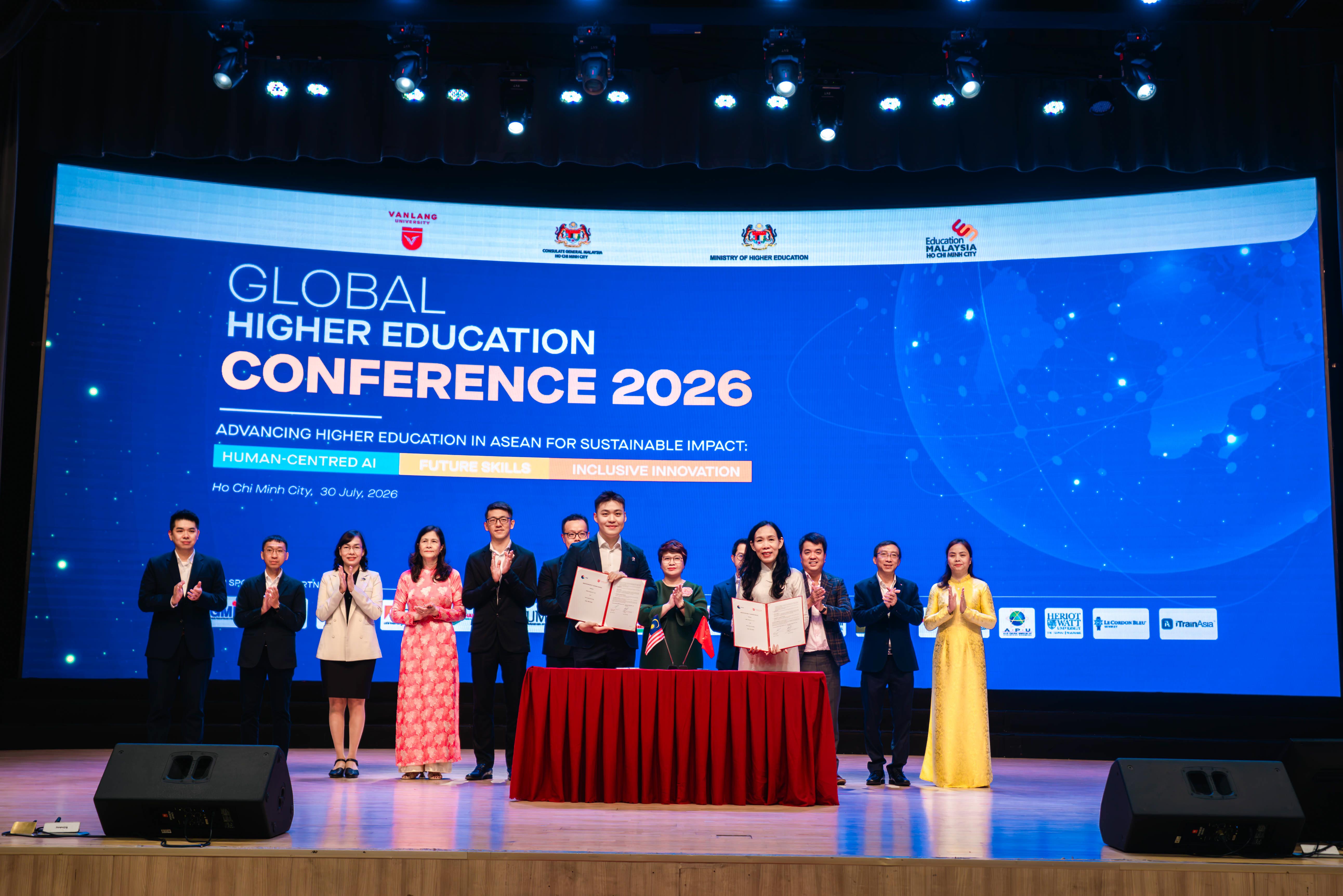
At the conference, the Signing Ceremony of the Memorandum of Understanding (MOU) between PMX (Malaysia) and Van Lang University took place, marking an important step in strengthening educational cooperation and innovation. According to the agreement, the two organizations will promote research activities, academic exchange, and the development of international cooperation programs, contributing to a connected educational ecosystem in ASEAN.
The GHEC 2026 event not only opened up multi-dimensional perspectives on AI application in higher education but also affirmed the internationalization strategy of Van Lang University on the journey to becoming a strategic partner in research, innovation, and high-quality human resource development projects for the region.
For Van Lang students, the conference brought an international learning experience right on campus. Perspectives on AI, future skills, and innovation have inspired them, urging students to proactively prepare their mindset and cultivate adaptability in the face of constant changes in the labor market. These experiences contribute to nurturing global thinking, interdisciplinary capabilities, and the spirit of lifelong learning – the core values that Van Lang University pursues.
News: Anh Minh, Phuong Duyen
Photos: Minh Phuong
Tags
