
From a Small Wacom Tablet to the Film Set: Tran Bao Han’s Journey with the Design Team of “Cam on nguoi da thuc cung toi”


Behind the success of the Vietnamese musical film “Cam on nguoi da thuc cung toi” was a young contributor working quietly offstage: Tran Bao Han, a Class 26 student majoring in Graphic Design at Van Lang University.
Han’s connection to filmmaking did not begin with a long-term plan, but rather through a fairly chance collaboration. In a previous short-film project, she was introduced to Ms. Anh La, the Art Director, with several prop designs required for the set. Her tasks primarily involved preparing print files according to artistic specifications and performing multiple rounds for revisions to ensure alignment with the overall aesthetic. Following that collaboration, Ms. La invited Han to join the design team for “Cam on nguoi da thuc cung toi” musical film, assigning her responsibility for the film’s graphic design elements used in printed set pieces.
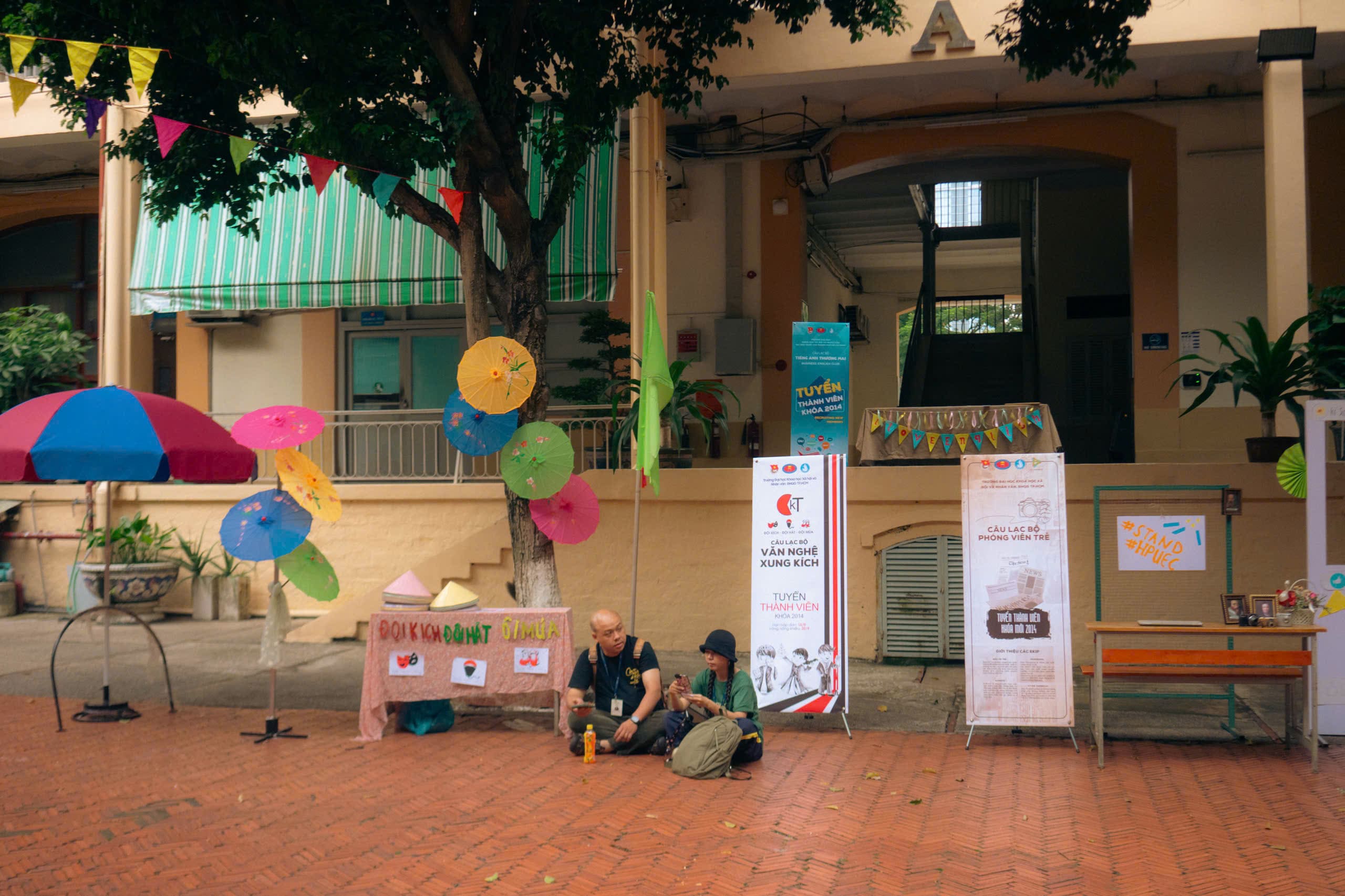
Unlike the common image of a hectic film set atmosphere, most of Han’s work took place in front of a computer screen. She was not frequently present on set, but had to constantly maintain communication with the art assistant to receive briefs, revise designs, and deliver files on schedule. Her laptop and Wacom tablet were practically indispensable throughout the entire project. Whenever a set entered its finishing stage, the turnaround time for file processing became urgent because designs needed to be printed and installed immediately.
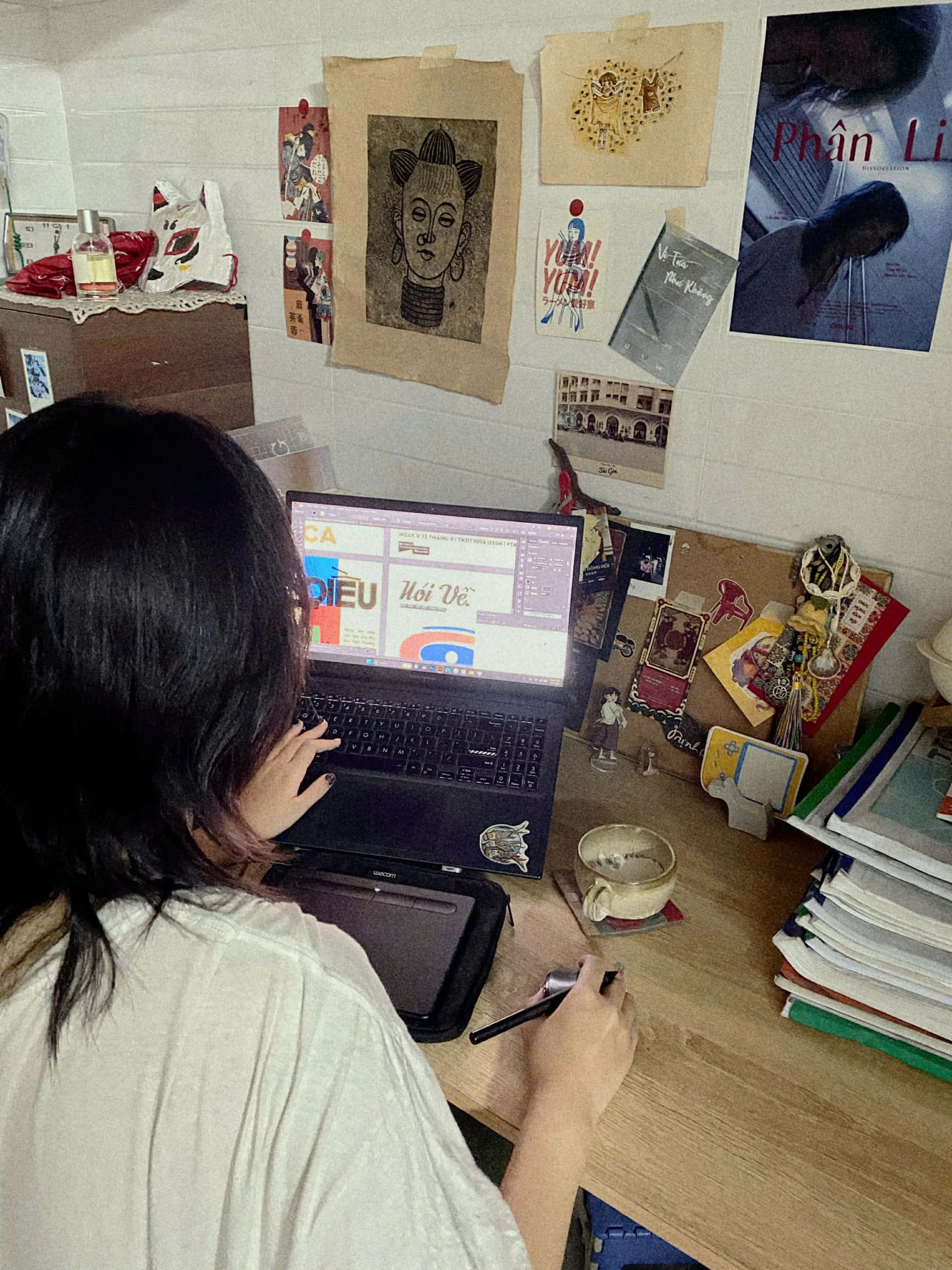
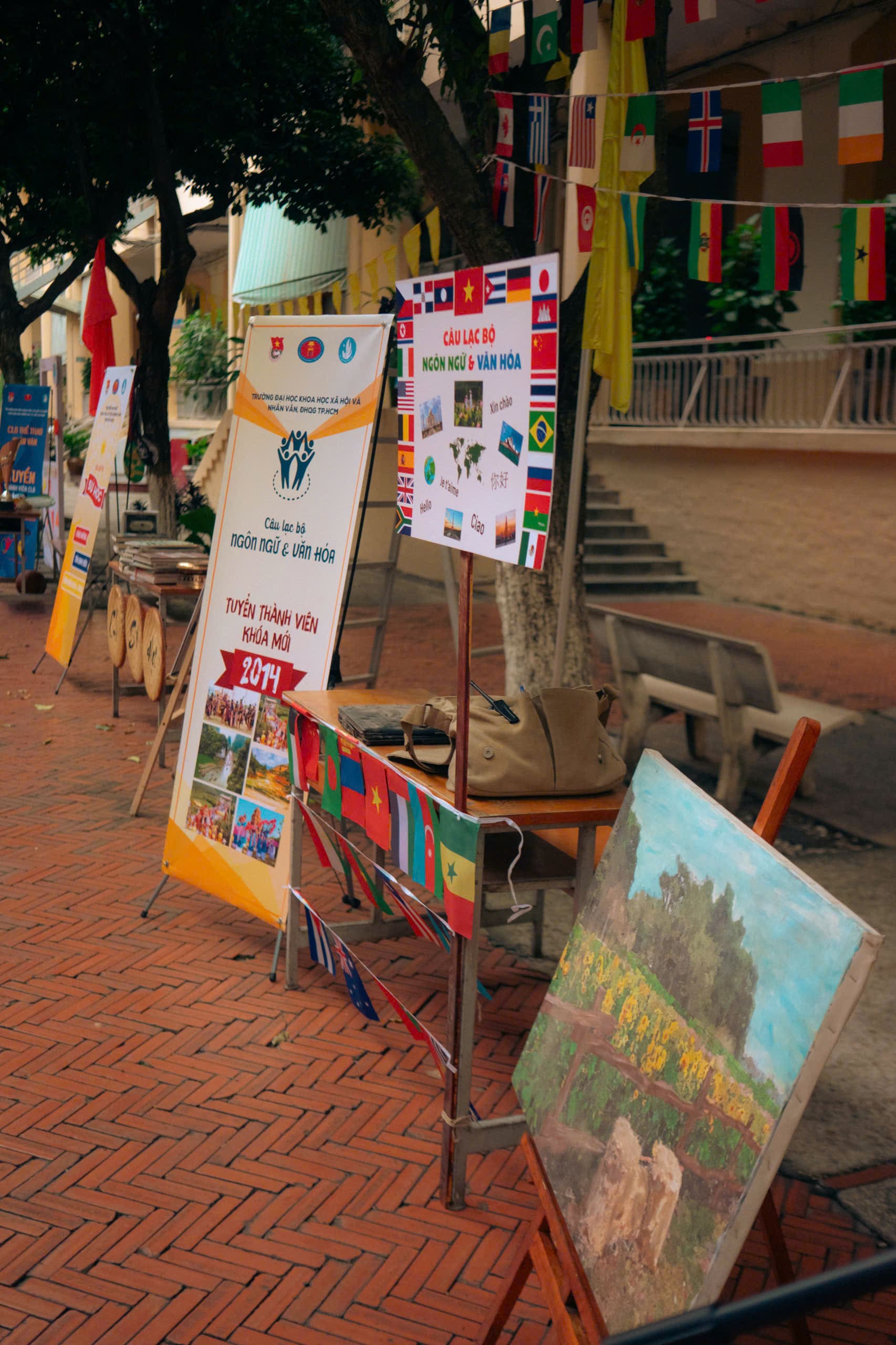
Han’s scope of work spanned the full range of graphic elements appearing throughout the film’s visual space: from posters, standees, product labels, signboards, and wallpaper to floor patterns and decorative details requiring print production. Some of these components may only appear briefly on screen, but they must be designed with consistent colors and style, in keeping with the overall visual direction. Each file required careful consideration of actual dimensions, printing materials, and production feasibility, rather than simply looking visually appealing on the monitor.
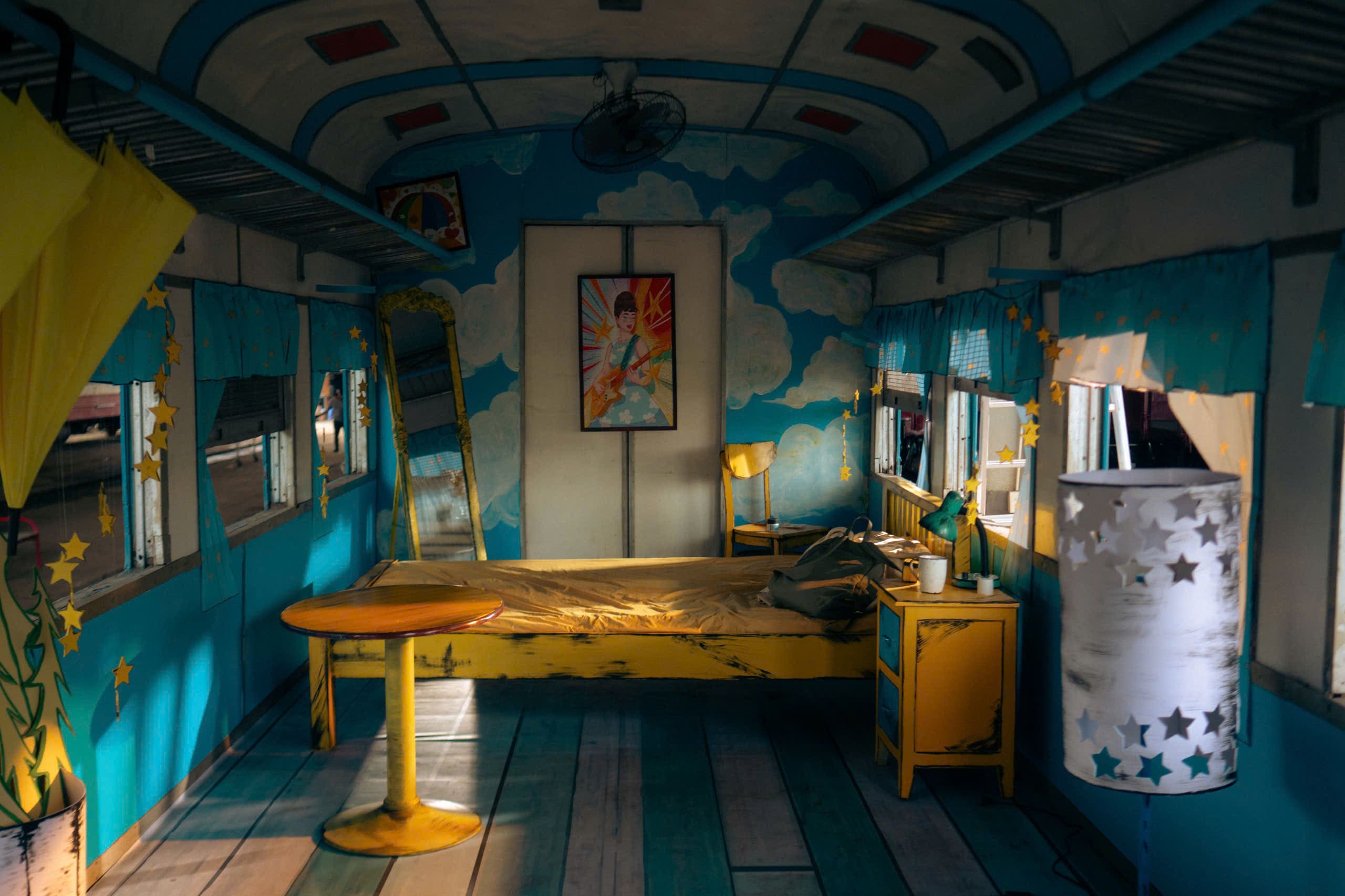
In the opening sequence set inside a train carriage inspired by “The Dream”, the printed graphics played a key role in constructing a visual style reminiscent of a comic book page. Surfaces such as walls, floors, and props were treated with hand-drawn-style textures, creating a flat and illustrative feel. Han was responsible for designing and finalising the print files for these details, working closely with the art department to ensure that the original creative intent was preserved once everything was installed in the physical set.
The journey from a print-ready design file to its final appearance on the big screen involves multiple steps and many contributors. Han’s work formed one link in that chain. This process was not documented through personal behind-the-scenes photos, but is reflected through the details woven into each scene. For a student majoring in Graphic Design, this was a hands-on experience that gave Han a deeper understanding of how graphic design functions within a professional filmmaking environment, one where every design must serve the space, the story, and the collective progress of the entire crew.
Tags