
Faculty of Arts & Design Sets Direction for AI Usage Guidelines in Academic and Creative Environments


On October 4, 2025, the Faculty of Arts & Design at Van Lang University organized the seminar “Creating with AI: Potential, Challenges, and Impact in Education.” The seminar focused on an in-depth analysis of the role and challenges of artificial intelligence in the fields of arts and design.
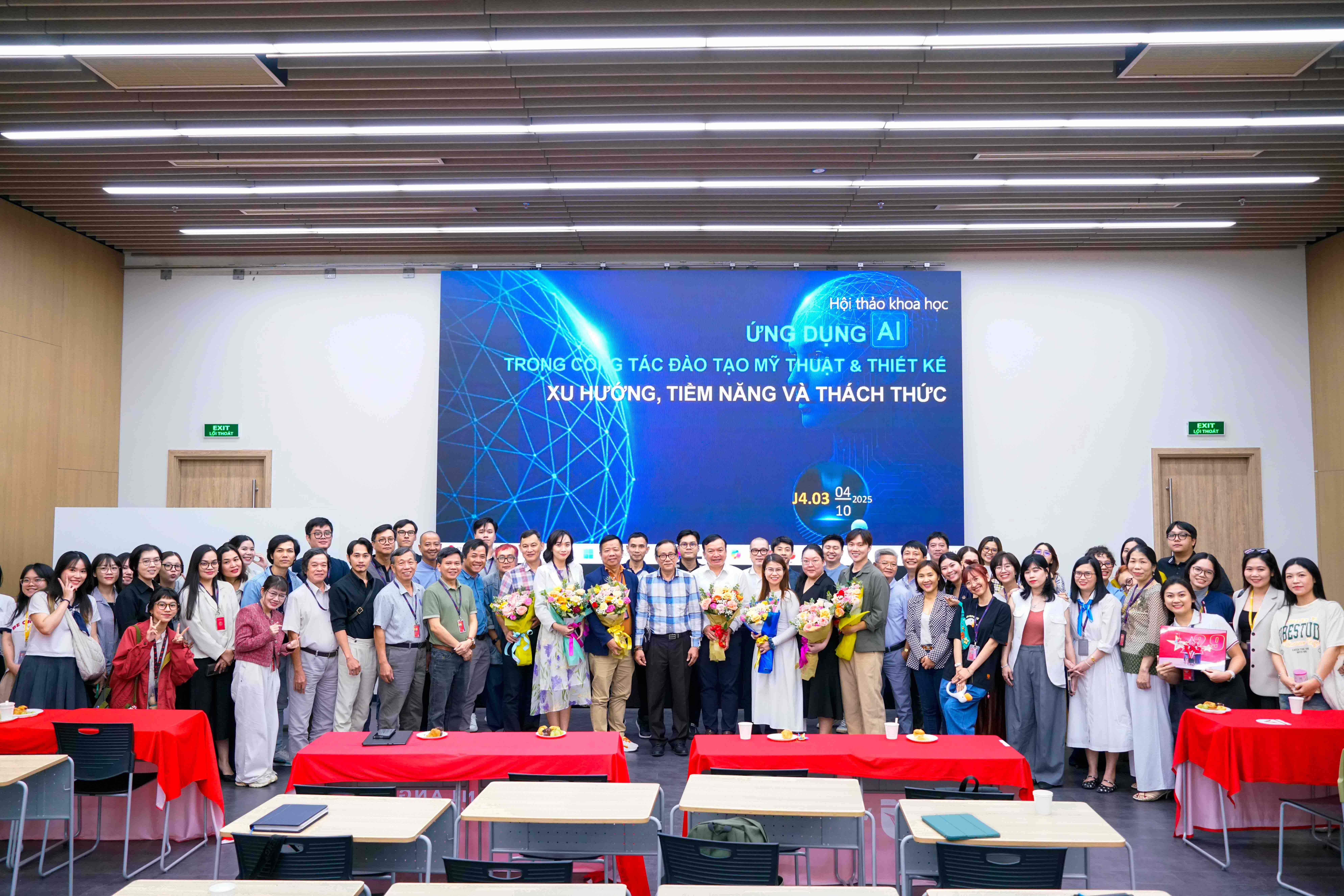
Opportunities and Risks of Using AI in Creative Processes
Painter. Phan Quan Dung, MA., Dean of the Faculty of Arts & Design, Van Lang University, emphasized: “While recognizing that AI has become a global trend and plays a significant role in creative workflows, we must also be aware of potential risks such as technology overuse, copyright infringement, and ethical concerns.”

In his presentation, Artist. Nguyen Quoc Thanh, M.A., Head of Graphic Design Major, highlighted five key values regarding “Personal identity in design in the age of artificial intelligence”: (1) Design is about creating unique value for each product; (2)AI is a tool – not the author; (3)Return to personal experience; (4) AI accelerates creativity and experimentation; (4)Humans can love, grieve, and reflect – AI cannot.
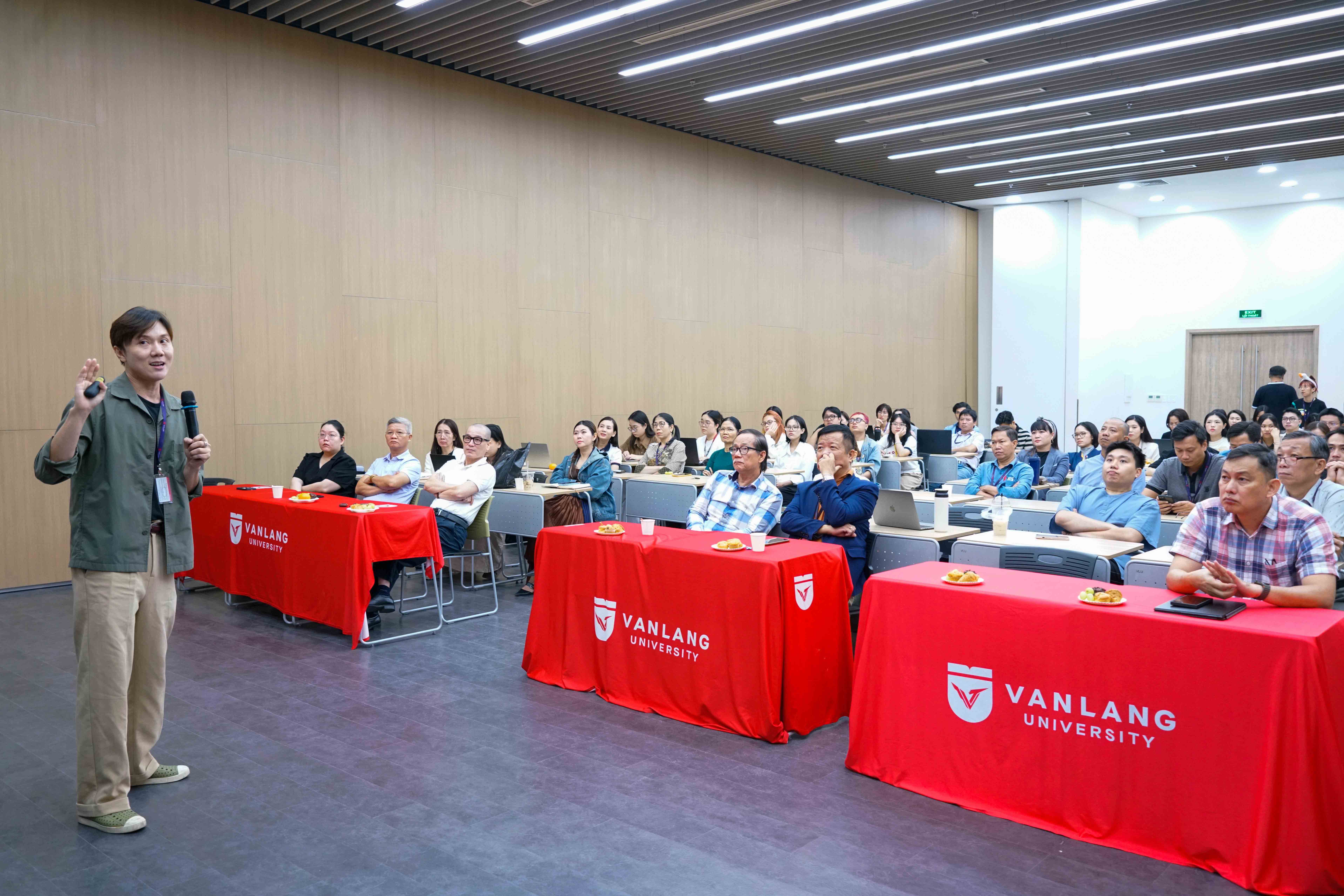
Today, asserting personal value as a designer is no longer about resisting AI, but about understanding, selecting, controlling, and conveying emotion through it. In education, AI should be regarded as a companion that helps students expand their experimental boundaries, while lecturers guide them in its ethical and selective use.
Evaluating creative thinking in the AI era should not stop at the final product, but also consider the process of idea formation, the exploration of personal experience, and the learner’s critical reflection. Only by understanding themselves and telling their own stories can designers truly create value—something AI, no matter how intelligent, can never replicate.
Academic Approaches to AI Usage
The seminar introduced transparent management models in AI applications, such as the AI Assessment Scale (AIAS) and the “Two-lane approach” from the University of Sydney, which clearly define levels of AI usage in learning and assessment. Meanwhile, practical experience from Coventry University also highlighted the importance of establishing specific citation rules for AI-generated content and images to maintain transparency and academic integrity.
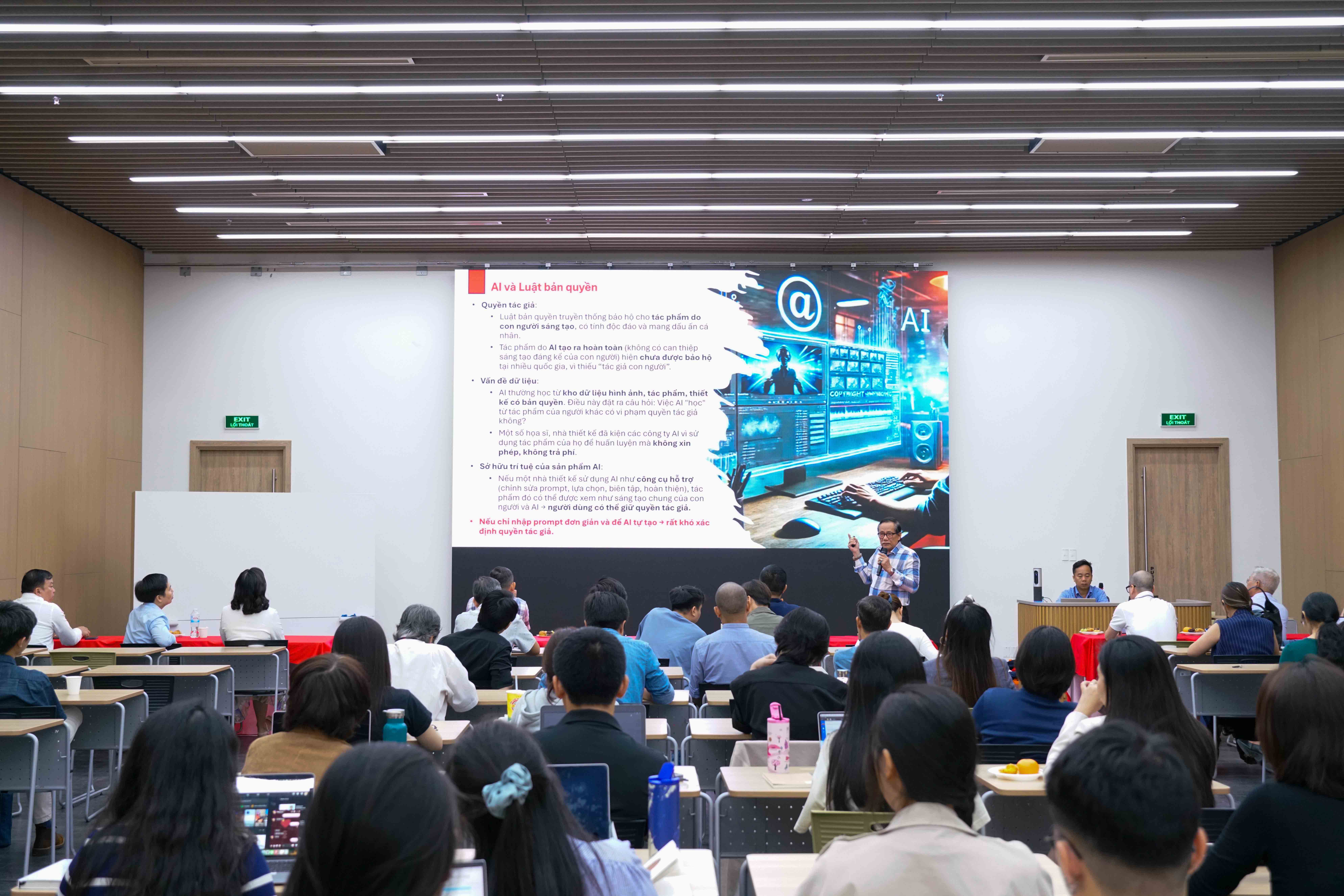
Recognizing the importance of this matter, the Faculty of Arts & Design is developing a set of AI usage guidelines in academic and creative environments. These guidelines encourage students to engage with technology selectively, critically, and with a strong sense of personal identity in their work.
Faculty lecturers also proposed an open approach, allowing students to freely explore and analyze information using AI—provided they understand the nature of the data and know how to transform it into personal creative value. To support this process, students will be encouraged to present, debate, and participate in academic discussions with lecturers and peers, thereby fostering proactive, independent, and responsible thinking in the era of AI technology.
News & Photos: Faculty of Arts & Design
Tags