
Class 28 of Logistics and Supply Chain Management Students Defend Graduation Theses on Digital Technology Applications


On January 5, 2026, Van Lang University held the Graduation Thesis Defense for Class 28 students majoring in Logistics and Supply Chain Management. The event marked a significant milestone in the students’ academic and research journey, reflecting their growth, competence, and readiness for professional practice.
During this year’s defence, two academic panels evaluated six research projects focusing on the application of digital technologies (AI, IoT, and API) alongside operational optimisation strategies. Each student had 15 minutes to present and defend their work before the panel.
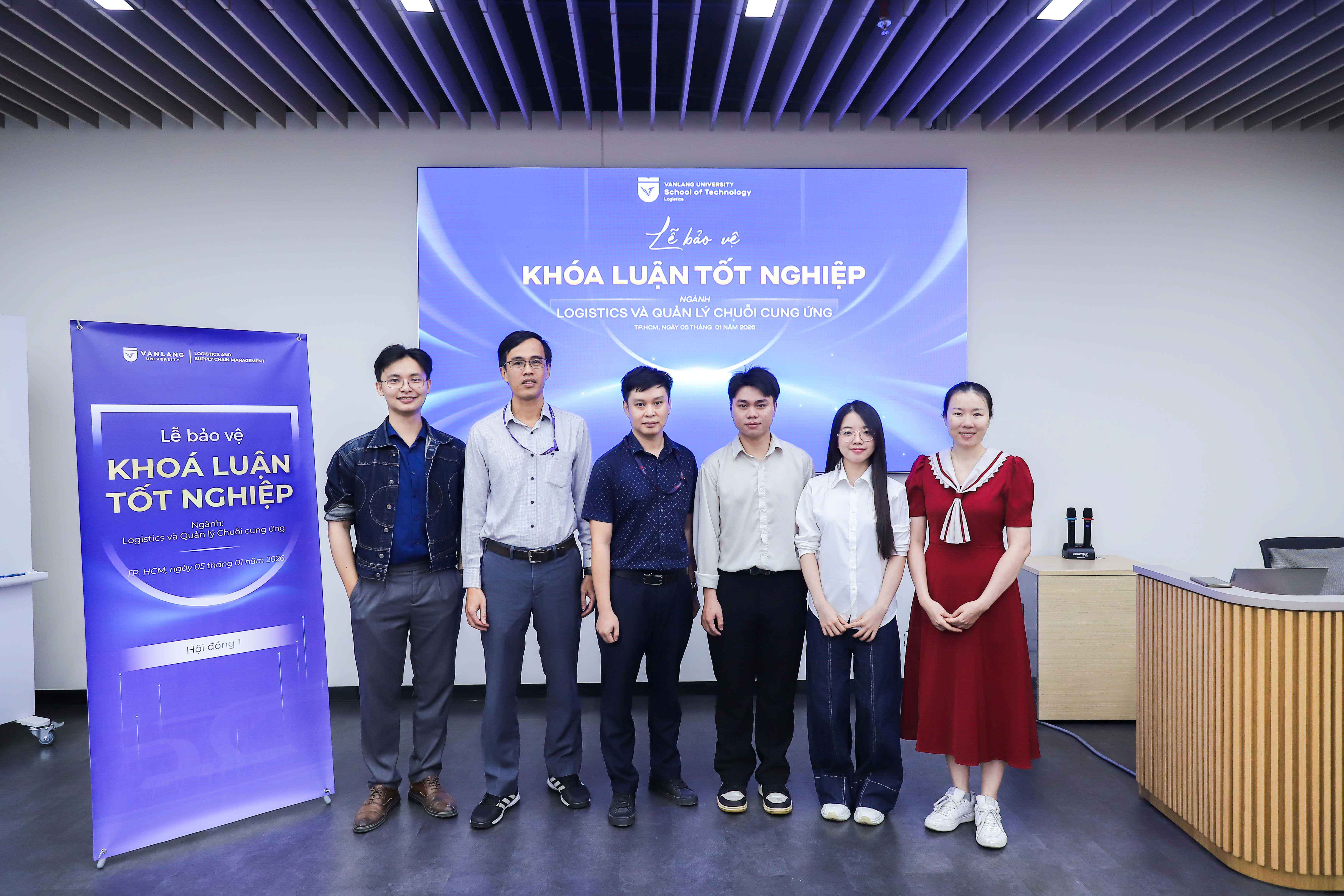
With thorough preparation, the thesis presentations received highly positive feedback from the panels. The students demonstrated a strong ability to apply theoretical knowledge to real-world contexts through topics such as supplier selection optimisation, the development of digital platform-based management systems, and the use of IoT and image recognition algorithms in warehouse operations. Many projects also incorporated solutions related to energy efficiency, circular economy principles, and sustainable development.
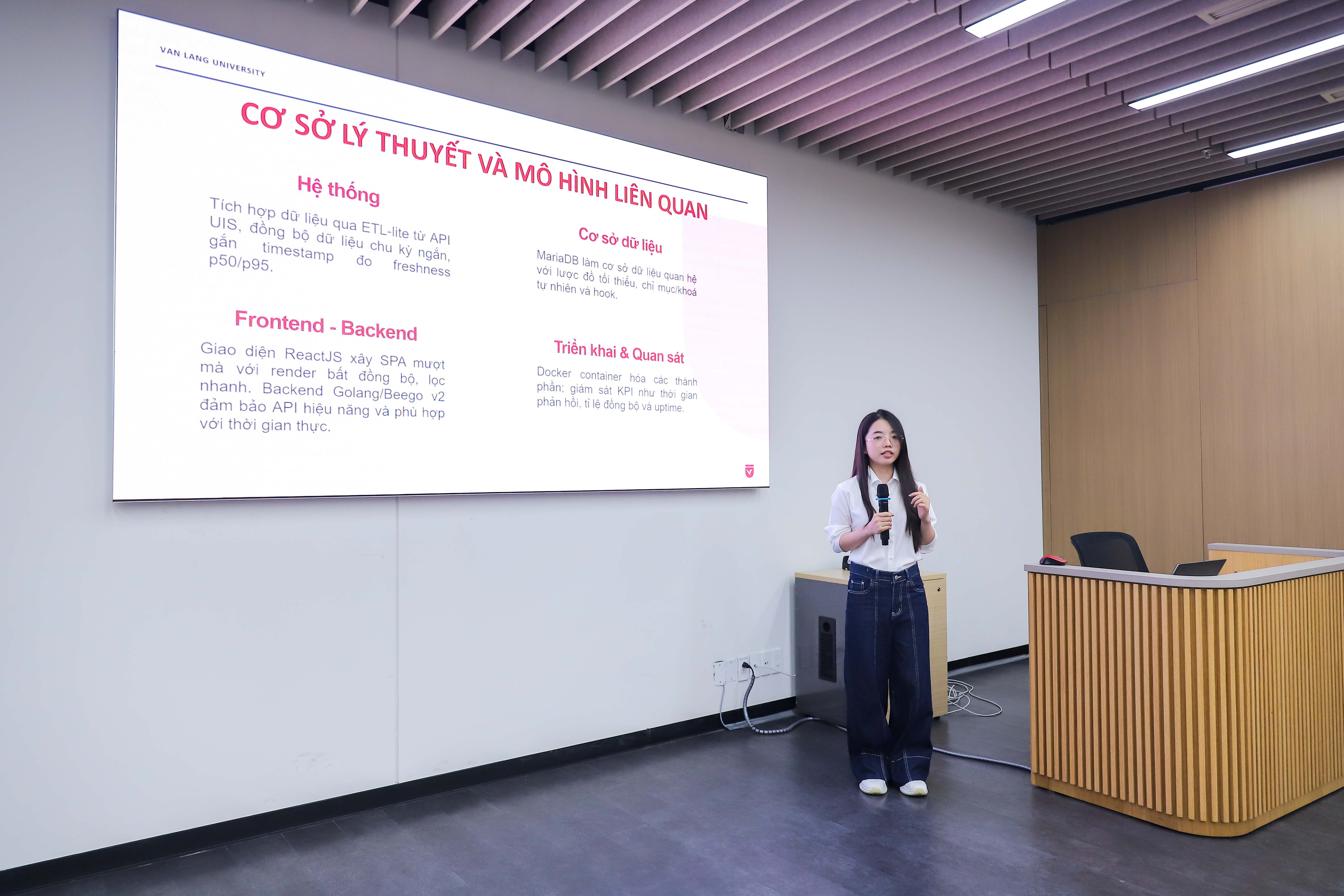
With the topic “Design and Implementation of an API-Based Integrated Scheduling-Room Management and Facilities Feedback System: A Pilot at Van Lang University (Main Campus)”, Nguyen Thi Ngoc Bich achieved the highest score in Panel 1. The system enables 100% data synchronisation, minimises duplication, and ensures information security. The Panel also recognised it as highly relevant to the University’s facility management context.
In Panel 2, Vu Tuyet Ngan and Pham Quynh Anh both achieved the highest score (9.17) with highly practical research projects. Particularly, Vu Tuyet Ngan’s thesis, “Design and Implementation of an IoT-Integrated Inventory Visualisation System for Lot Segmentation and Near Real-Time Cargo Tracking,” focuses on improving inventory management. Meanwhile, Pham Quynh Anh’s thesis, “Application of Image Recognition Algorithms for Visual Inspection of Goods in Warehouse Receiving Processes,” explores automation in warehouse operations.
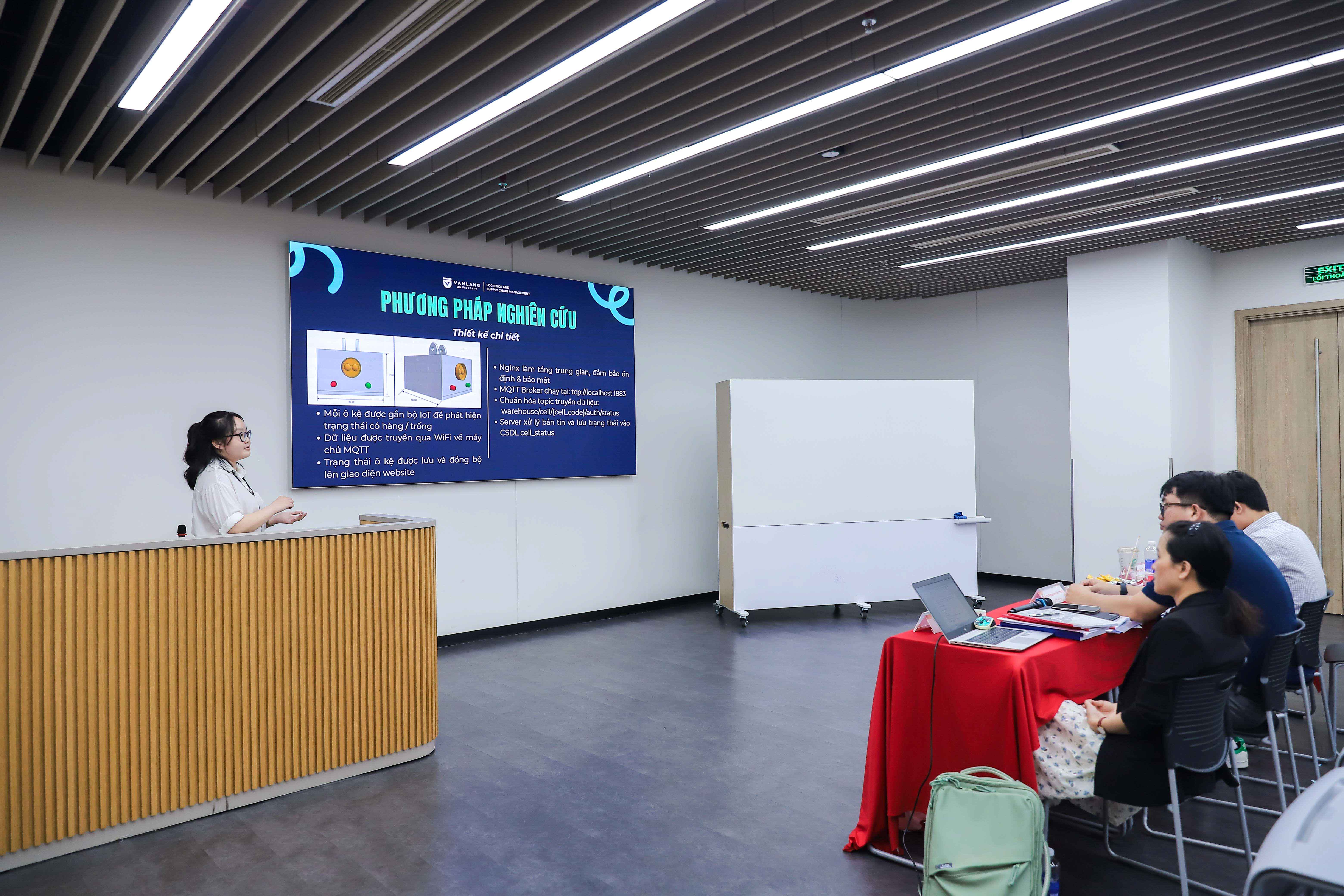
Sharing insights into her research, Tuyet Ngan highlighted that the core objective of her project was to optimise costs for small and medium-sized enterprises, a group often underrepresented in previous studies. Following the completion of her thesis, she plans to deploy the system in real-world warehouse operations rather than limiting it to an academic pilot.
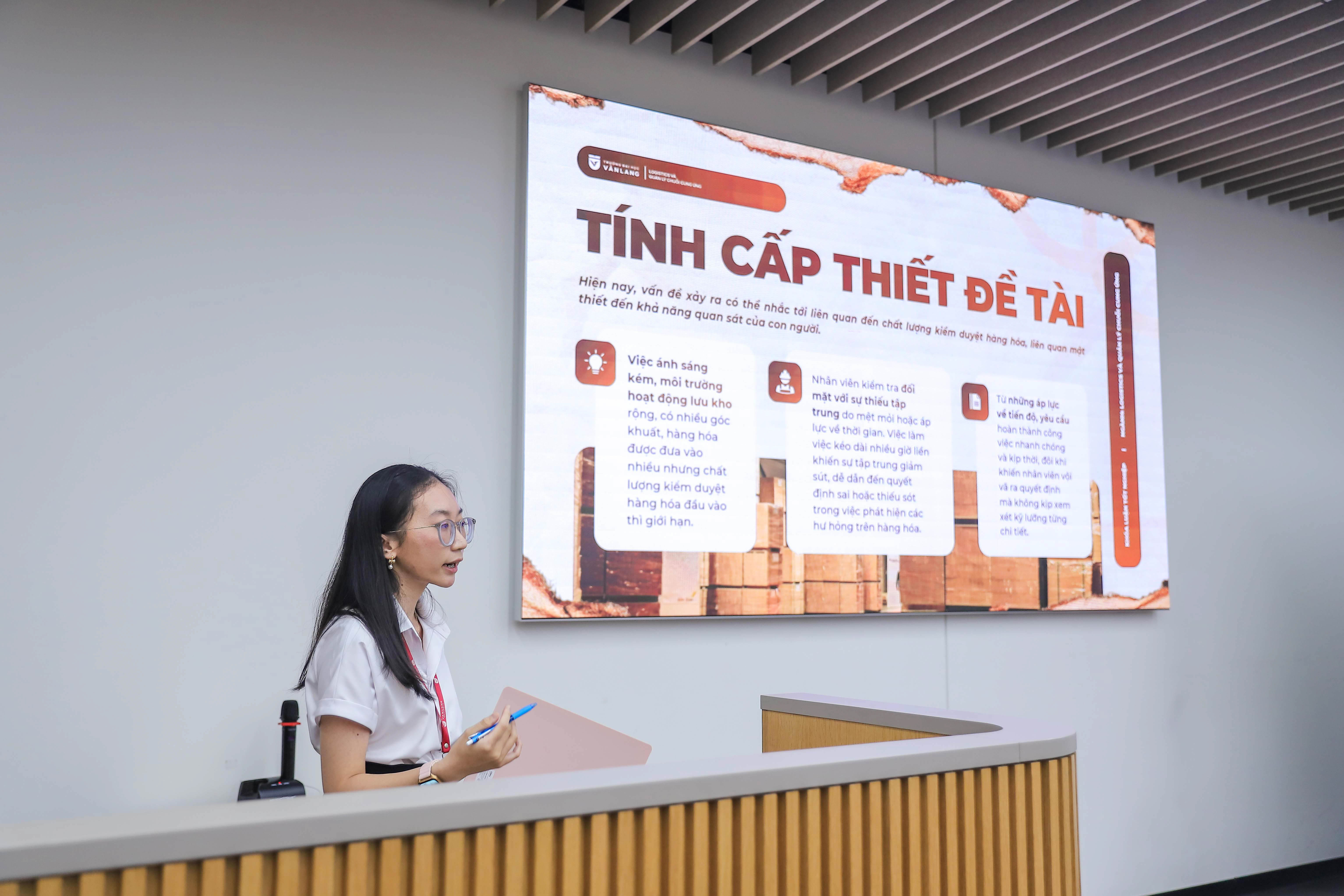
Echoing the importance of practical application, Pham Quynh Anh addressed current challenges in warehouse receiving operations, particularly high labour costs and inefficiencies in goods identification processes. Her proposed solution leverages technology to automate these processes, helping businesses reduce costs and improve search efficiency within large warehouse environments. As a result, the system can reduce workload pressures on inventory staff while enhancing overall operational performance.
The thesis defence for Class 28 Logistics and Supply Chain Management students concluded successfully, featuring six highly practical research projects. Constructive feedback and in-depth evaluations from the academic panels have equipped students with the confidence to transition from academia to professional environments, contributing to the continued development of the logistics industry.
News: Thien An
Photos: Tien Tinh
Tags