
AI applications in teaching – A step forward toward the vision of a “Smart University”


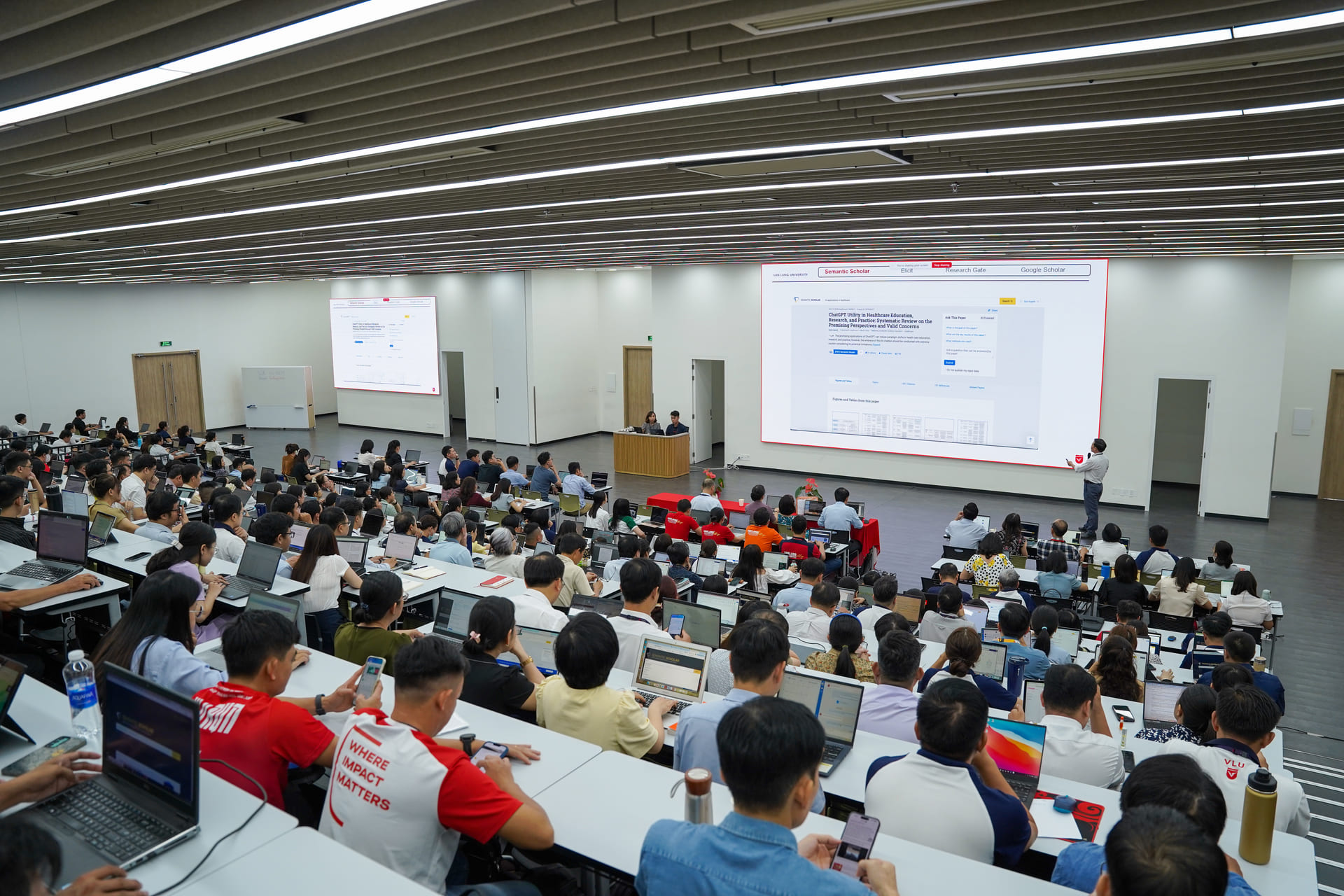
On the afternoon of September 4, 2025, the seminar titled “Applying Artificial Intelligence (AI) in Teaching for University Lecturers” welcomed nearly 300 faculty members in attendance. The event was part of a series of digital technology training programs for lecturers, co-organized by the Institute of Experiential Technology and the Training and Development Center.
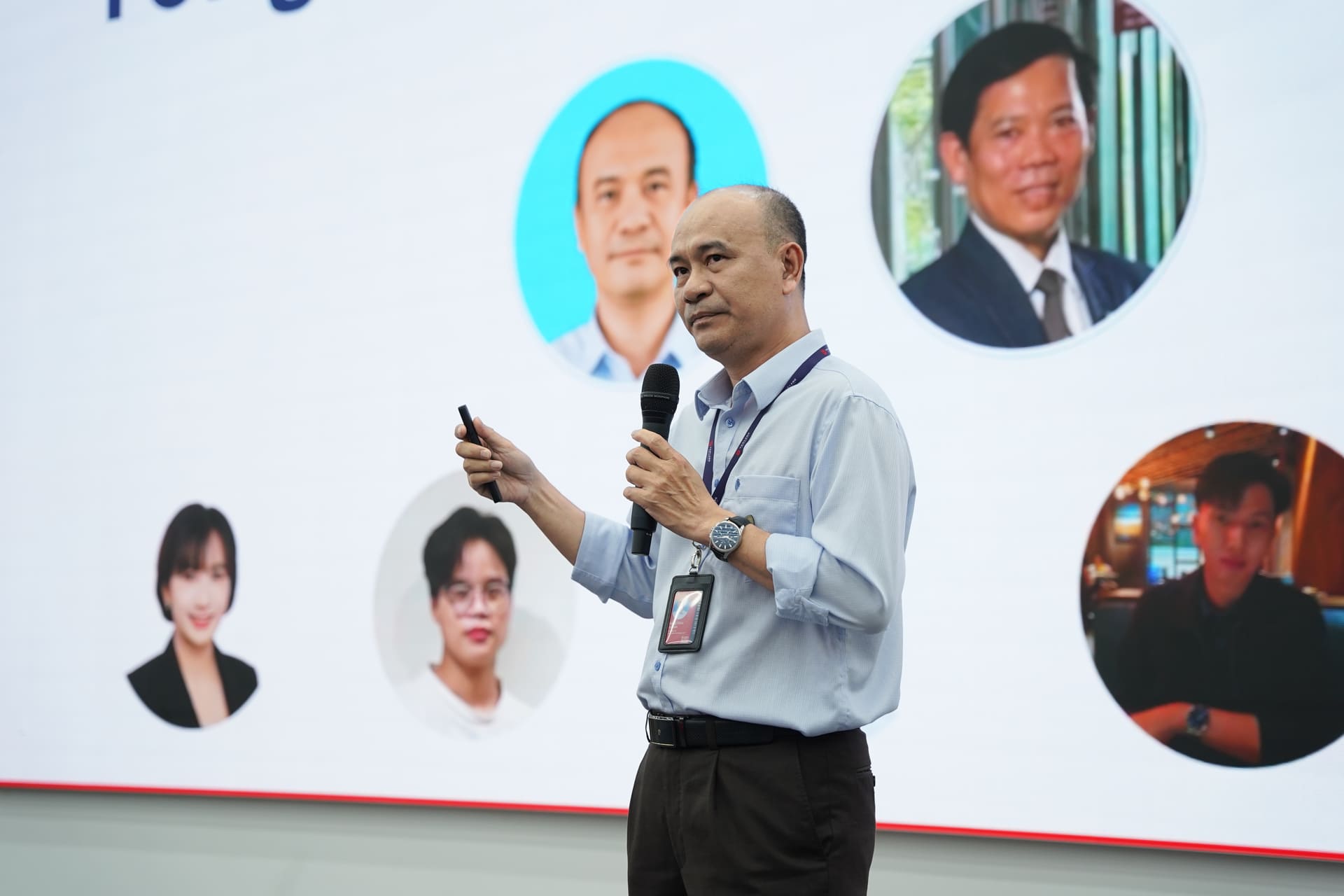
In his opening presentation, Assoc. Prof. Dr. Dang Tran Khanh, Director of the Institute of Experiential Technology, provided an overview of artificial intelligence (AI) in education, emphasizing the pivotal role of technology in enhancing teaching effectiveness and university governance. AI not only enables the personalization of learning paths and predicts student outcomes but also serves as a practical tool for faculty in everyday tasks such as academic advising, student recruitment, and classroom management.
Drawing from the historical context of industrial revolutions, from mechanization, electrification, and automation to the Fourth Industrial Revolution, Assoc. Prof. Dr. Khanh pointed out that machines have evolved beyond merely replacing manual labor and are now increasingly performing intellectual tasks. In this context, the integration of AI into education is no longer optional, but an inevitable trend requiring educators to swiftly adapt and innovate.
His presentation highlighted three key application areas of AI:
- In teaching and learning: Supporting lesson planning, material development, smart content creation, automated test generation, and grading.
- In education management: Optimizing administrative and academic processes, curriculum development, and learner data forecasting.
- In promoting learning equity: Creating opportunities to support students with special needs, while also presenting new challenges such as academic dishonesty, which necessitate stringent oversight mechanisms.
A notable feature of the presentation was the proposal of a “learning path” tailored for lecturers, starting with familiarization with AI tools in teaching, progressing toward applications in research and management, and ultimately moving toward the realization of a “Smart University” in the near future.
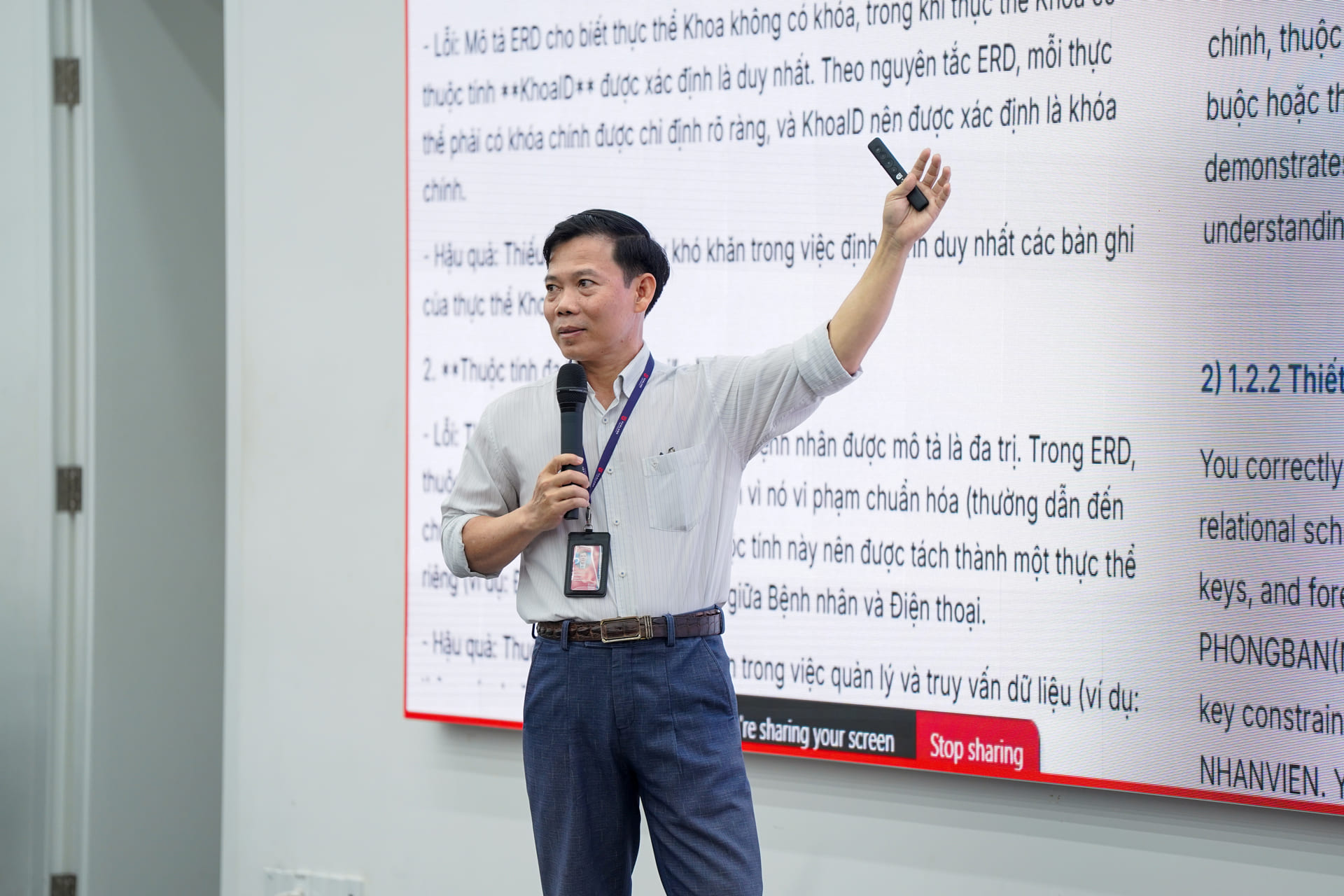
Dr. Nghia, Research Fellow at the Institute of Experiential Technology, offered an in-depth demonstration of practical AI tools for teaching, ranging from academic search and content filtering to automatic lecture slide creation, as well as drafting, grading, and evaluating both multiple-choice and essay-based assignments with ability to quickly assess and make suggestions for improvement. Workshop participants witnessed live demonstrations of AI-generated exam papers, automated essay grading, and detailed feedback generation.
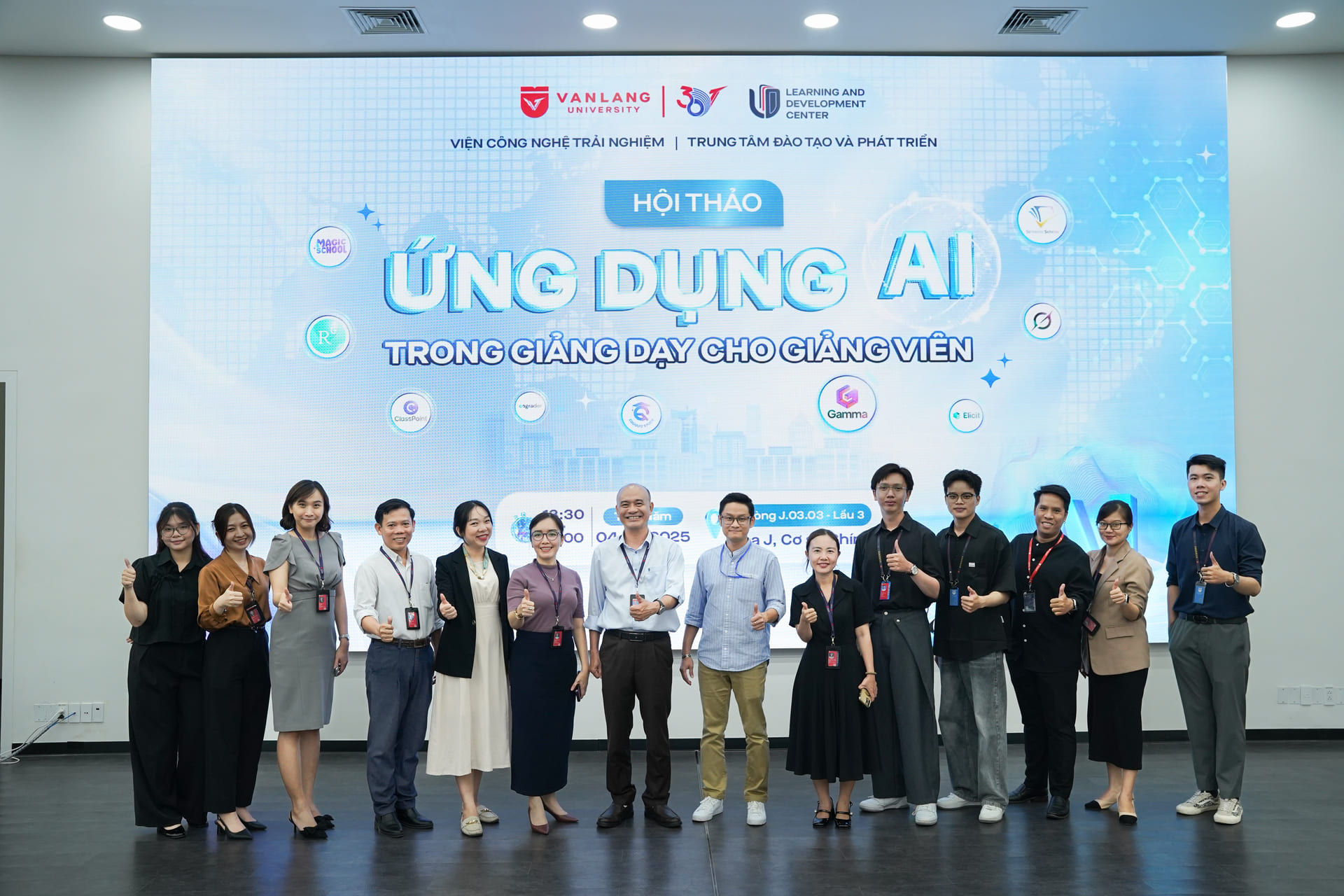
At Van Lang University, special emphasis is placed on enhancing digital competencies and reshaping teaching methodologies in the era of digital transformation. This seminar was not only a platform for knowledge sharing, but also a catalyst for innovation, laying the foundation for our progress toward the goal of building a “Smart University” in the near future.
News: Thuy Tram
Photos: Nguyen Phuc An Khang
Tags